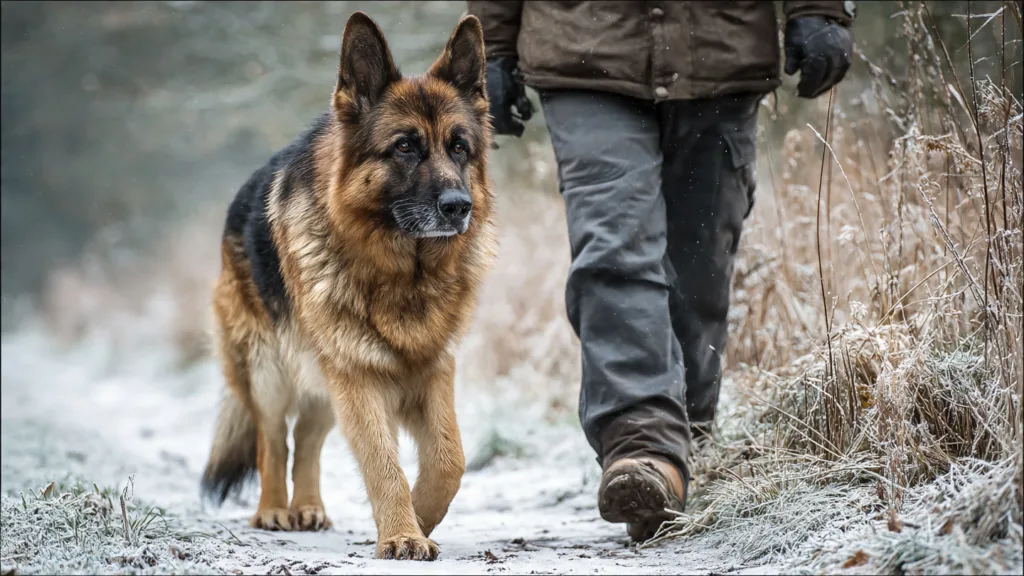
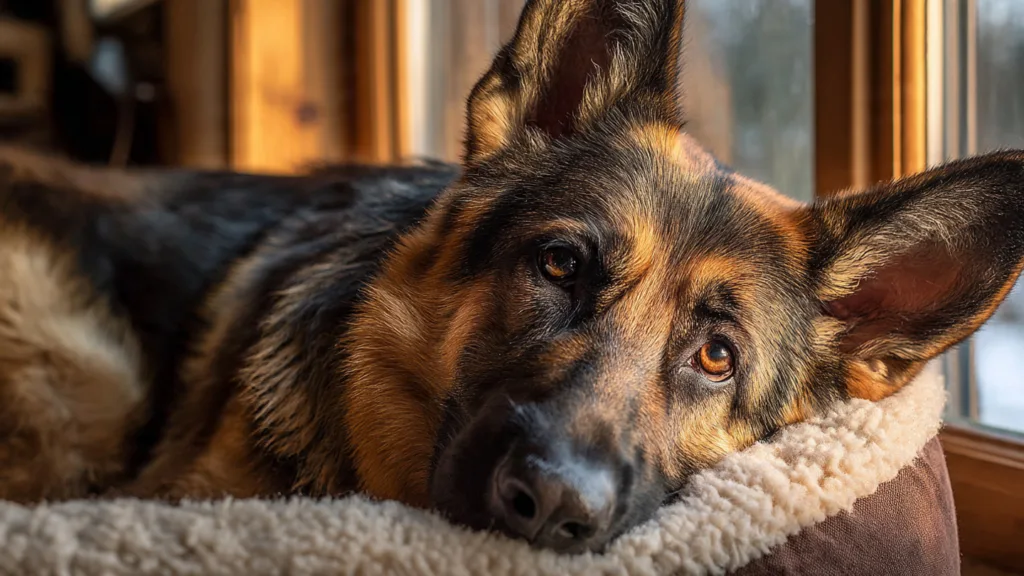
Your German Shepherd has a legendary double coat and a love for snowy weather. It’s easy to assume they’re invincible in the cold. But even this hardy breed has limits. Recognizing the signs a german shepherd is cold isn’t just about comfort—it’s a crucial skill that can prevent a dangerous situation from becoming a life-threatening emergency.
Cold stress and hypothermia can set in surprisingly fast, especially with wind or dampness. Knowing the early warning symptoms allows you to act before your dog’s condition deteriorates.
This guide will walk you through the physical and behavioral german shepherd cold symptoms, from the first subtle hints to critical red flags. You’ll learn exactly what to look for and the immediate steps to take to warm your dog safely.
Early Warning Signs: Your Dog is Uncomfortable & Losing Heat
These are the first indicators that your GSD is too cold and needs to come inside. Catching them here prevents more serious hypothermia in german shepherds.
- Excessive Shivering: Brief shivering from excitement is normal. Persistent, muscular shivering is the body’s primary way to generate heat and is a clear signal.
- Whining or Barking: Vocalizing can be a sign of anxiety, discomfort, or an attempt to tell you they’re unhappy with the situation.
- Lifting Paws: Alternately holding paws off the cold ground is a classic sign of discomfort. Ice balls between paw pads can also cause this.
- Slowing Down or Reluctance to Move: Your energetic dog may become lethargic, lag behind on walks, or refuse to continue playing.
- Seeking Shelter: Actively trying to burrow, hide behind objects, or paw at the door to get back inside.
- Anxious Body Language: Tucked tail, hunched posture with a arched back, and ears held back.
Moderate to Severe Symptoms: Hypothermia is Setting In
If the early signs are missed, your dog’s condition can progress. These signs a german shepherd is cold indicate a medical issue is developing.
- Stiffness or Clumsiness: Muscles become stiff from the cold, leading to a stiff-legged gait, stumbling, or difficulty standing.
- Weakness and Lethargy: Your dog may appear drowsy, weak, or unresponsive to commands. They may lie down and refuse to get up.
- Pale or Gray Gums: Check their gums! Healthy gums are pink. Cold-stressed gums may become pale, gray, or bluish.
- Shivering Stops: In severe cases, shivering may stop. This is a dangerous sign, as it means the body has exhausted its ability to generate heat through movement.
Critical Red Flags: This is an Emergency
These symptoms indicate severe hypothermia in a german shepherd and require immediate veterinary attention.
- Collapse or Inability to Stand
- Dilated Pupils
- Shallow, Slow Breathing
- Loss of Consciousness
- A profound drop in body temperature (feel the belly/armpits—they will feel icy cold)
Hypothermia Severity Chart: A Quick Reference Guide
| Stage Core Temperature | Key Symptoms | Action Required |
|---|---|---|
| Mild 90°F – 99°F (32°C – 37°C) | Strong shivering, whining, lifting paws, anxious. | Bring indoors immediately. Dry off, wrap in blankets. |
| Moderate 82°F – 90°F (28°C – 32°C) | Shivering may stop, muscle stiffness, weakness, lethargy, pale gums. | Active warming needed. Use warm (not hot) blankets, offer warm fluids. Contact your vet. |
| Severe Below 82°F (Below 28°C) | Collapse, unconsciousness, fixed/dilated pupils, very slow breathing. | LIFE-THREATENING. Wrap dog, apply warm water bottles to core (never limbs). GET EMERGENCY VET CARE NOW. |
What to Do Fast: Your Step-by-Step Warming Protocol
If you notice any signs beyond mild shivering, follow these steps:
- Get Them Inside Immediately: Move your dog to a warm, draft-free area.
- Dry Them Thoroughly: Use clean, dry towels to absorb all moisture from their coat, especially the dense undercoat. Remove any ice or snow from between paw pads.
- Wrap Them in Warmth: Use dry blankets, towels, or a sweater. You can warm blankets in the dryer for a few minutes first. Avoid direct high heat like hair dryers on hot settings or heating pads, which can burn cold skin or cause shock.
- Apply Gentle, Indirect Heat: For moderate cases, fill water bottles with warm (not hot) water, wrap them in towels, and place them against your dog’s chest and belly (the core). Snuggle with them to share body heat.
- Offer Warm Fluids: If your dog is alert and able to swallow, offer small amounts of lukewarm water or low-sodium chicken broth to help warm from the inside.
- Monitor and Check Temperature: If you have a pet thermometer, check their rectal temperature every 10-15 minutes. Once it reaches 100°F (37.7°C), you can remove the external heat sources to prevent overheating, but keep them wrapped in dry blankets.
- Call Your Veterinarian: For any symptoms beyond mild shivering, or if you are unsure, call your vet immediately. They can guide you and determine if your dog needs to be seen. Severe symptoms require immediate emergency care.
Prevention is the Best Medicine
- Know Their Limits: Most GSDs are uncomfortable below 20°F (-7°C). In wet/windy conditions, that limit is much higher.
- Use Protective Gear: A waterproof winter coat helps retain heat. Dog booties protect paws from cold surfaces and toxic de-icers.
- Keep Them Dry: A wet coat loses almost all insulating ability. Limit time in rain or wet snow.
- Watch the Clock: In very cold weather, opt for multiple short potty breaks instead of one long walk.
Frequently Asked Questions (FAQ)
Q: My German Shepherd is shivering as soon as we go outside. Does this mean he’s always cold?
A: Not necessarily. A brief burst of shivering can be a normal reaction to a sudden temperature change or excitement. The key is persistent shivering that continues as they are outside. If they shiver immediately and don’t stop, they are likely under-dressed for the conditions.
Q: Can a German Shepherd get too cold inside the house?
A: Yes, especially puppies, seniors, or sick dogs. Drafty floors, basements, or keeping the thermostat very low can cause discomfort. Provide a thick, elevated bed away from drafts.
Q: He seems fine but his ears feel very cold. Is that a sign?
A: Cold ears alone aren’t a reliable sign, as extremities cool first. You need to check the core. Feel the skin on their belly, chest, or inside their armpits. If those areas feel unusually cool or cold to the touch, it’s a sign their core temperature is dropping.
Stay Vigilant, Stay Warm
Your German Shepherd trusts you to keep them safe. By learning to read their subtle cold symptoms and acting quickly, you ensure that your winter adventures together are filled with happy memories, not emergency vet visits. When in doubt, always err on the side of warmth and comfort.