Is Your German Shepherd Feeling the Winter Chill? A Seasoned Owner’s Guide
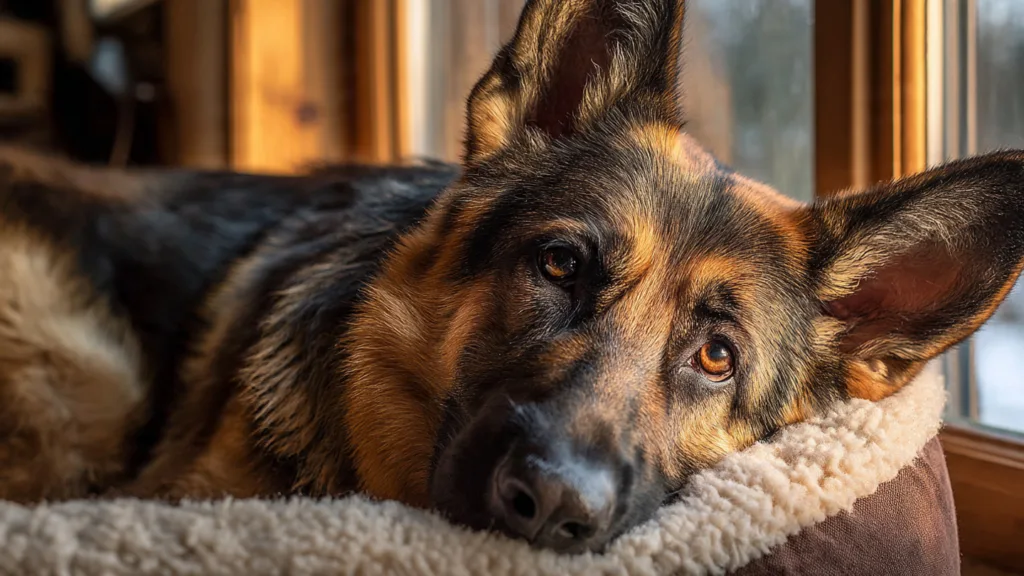
Hey there, fellow German Shepherd lover. If you’re reading this, chances are you’ve noticed your loyal companion acting a little different as the temperature drops. I’ve been through many winters with my own GSD, Kaiser, and I know that look—the slight shiver, the reluctance to go outside, the way they curl up a little tighter in their bed.
While that double coat looks impressive, winter can be a real challenge for these magnificent dogs. It’s not just about being cold; it’s about how the season affects their entire routine, from their joints to their energy levels. But don’t worry, with a few smart adjustments, you can ensure your furry best friend stays happy, healthy, and warm all season long. Let’s dive in.
Why Your Tough Shepherd Might Be Shivering
It’s easy to assume a big, strong German Shepherd is built for any weather. But several factors make them susceptible to the cold, and understanding these is the first step to helping them.
That Coat Isn’t Always Enough
Yes, they have a double coat, but its efficiency depends on the individual dog and the conditions. A GSD with a poor-quality coat, one that’s wet or matted, or a dog that is primarily an indoor pet won’t have the same cold resistance as a working dog acclimated to the outdoors. A damp coat loses its insulating properties almost completely, which is a major issue with sleet and wet snow.
Age, Health, and Body Mass Matter
Just like us, a dog’s tolerance for cold changes with age and health. Senior shepherds often have more arthritic pain that is exacerbated by the cold. Thinner dogs, or those with lower body fat, have less natural insulation. Underlying health issues like hypothyroidism or heart problems can also affect their ability to regulate body temperature.
The “Indoor Dog” Factor
Our dogs live a comfortable life with us! They spend most of their time in our climate-controlled homes. This means they haven’t built up the same natural resilience as a dog that lives outdoors full-time. When they are suddenly exposed to freezing temperatures, it’s a significant shock to their system.
When to Call the Vet 🩺
It’s crucial to know the signs of hypothermia. If your German Shepherd is shivering violently, acting lethargic or confused, whining, or if their gums seem pale, these are red flags. Weakness and shallow breathing are also serious signs. Get them warm and contact your veterinarian immediately. It’s always better to be safe and make that call.
Your Step-by-Step Winter Warmth Plan
Helping your German Shepherd thrive in the winter is about a holistic approach. It’s not just one thing; it’s a combination of protection, comfort, and routine.
Step 1: Master the Outdoor Essentials
Going outside is non-negotiable for bathroom breaks and mental stimulation, so we have to make it safe and bearable.
Paw Patrol is a Must:
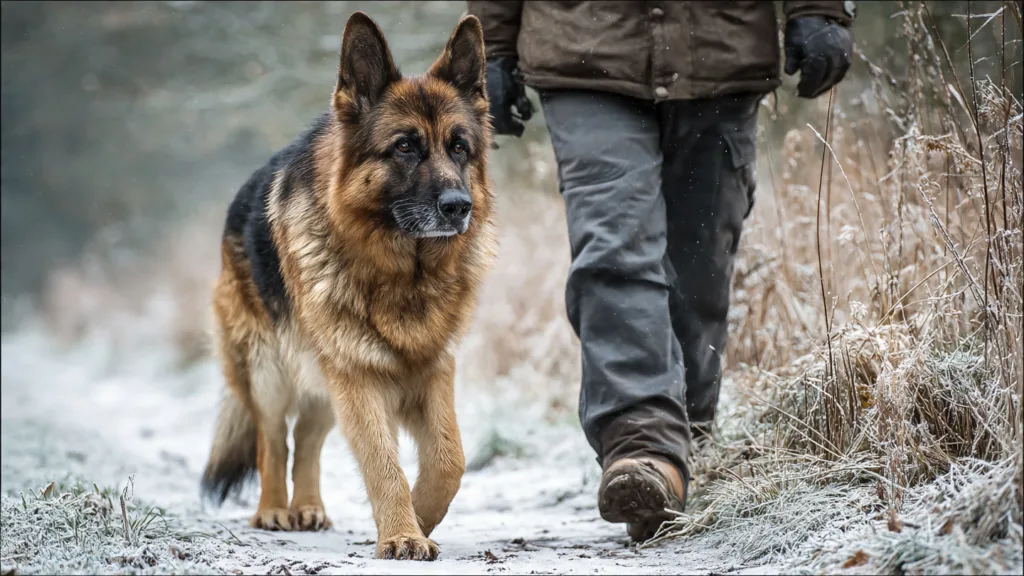
Ice, snow, and worst of all, chemical de-icers are brutal on paw pads. I always use a protective wax like Musher’s Secret on Kaiser’s paws before our walks. It creates a barrier against the elements. When you come back inside, wipe their paws and belly thoroughly with a warm, damp cloth to remove any salt or chemicals they could lick off.
Consider a Coat or Sweater:
I know, a coat on a German Shepherd? Hear me out. For older dogs, thin dogs, or during particularly bitter cold snaps (think below 20°F / -7°C), a well-fitting, waterproof coat can make a world of difference. It helps retain their body heat, especially on their core.
Shorter, More Frequent Outings:
Instead of one long, chilly walk, opt for two or three shorter, more active outings. This minimizes their exposure while still giving them the exercise and stimulation they need.
Step 2: Create a Cozy Indoor Sanctuary
Your home is their haven. A few simple changes can make it extra cozy.
- The Perfect Bed Setup: Get their bed off the cold floor. Place it in a draft-free area, away from windows and exterior doors. An orthopedic bed is fantastic for older shepherds with achy joints. I also give Kaiser a couple of warm, fuzzy blankets he can burrow into. He loves rearranging them himself!
- Heating Pad Magic: A low-wattage, pet-safe heating pad placed under a blanket in their bed can be a game-changer for a stiff senior dog. Always ensure it’s designed for pets and they can move away from it if they get too warm.
- Humidity is Your Friend: Indoor heating dries out the air, which can irritate your dog’s skin and nose. Using a humidifier in the main living area can help both you and your pup breathe easier and keep their skin from getting flaky.
Step 3: Adapt Their Food & Activity
Winter often means less activity, but their needs can still change.
- Food & Water Check: If your dog’s outdoor activity level has significantly dropped, they may need slightly less food to avoid weight gain. However, if they are spending a lot of time outdoors burning calories to stay warm, they might need a bit more. Watch their weight and adjust accordingly. And always ensure fresh, unfrozen water is available!
- Embrace Indoor Brain Games: A bored German Shepherd is a destructive German Shepherd. When it’s too cold to run, make them think! We love puzzle toys, hiding treats around the house for a “find it” game, and practicing old and new training commands for 10-15 minutes a day. This mental workout is just as tiring as a physical one.
Quick-Reference Winter Care Chart
| Area of Care | My Top Tips & Product Ideas |
|---|---|
| Paw Care | Paw wax (e.g., Musher’s Secret), post-walk warm wipe-down, consider dog boots for extreme conditions or salted areas. |
| Outerwear | Waterproof, well-fitting coat for thin, senior, or ill dogs in very cold weather. |
| Indoor Comfort | Elevated or orthopedic bed, warm blankets, draft-free location, pet-safe heating pad. |
| Indoor Exercise | Puzzle toys, hide-and-seek with treats, short training sessions, indoor fetch in a long hallway. |
| Nutrition | Monitor weight, adjust food based on actual activity level, ensure constant access to fresh water. |
Final Words of Encouragement
Navigating winter with your German Shepherd is all about being observant and proactive. You know your dog better than anyone. Pay attention to their signals. Are they hesitant to go outside? Shivering more than just a quick shake-off? Curling up tightly and seeking out warm spots?
These are all clues. By taking the steps we’ve talked about – protecting those paws, creating a warm den at home, and keeping their mind active – you’re not just preventing discomfort; you’re strengthening that incredible bond you share. Winter doesn’t have to be a season you both just “get through.” It can be a time of cozy cuddles by the heater and fun indoor games.
I’d love to hear from you! What’s the one winter hack that your German Shepherd absolutely loves? Sharing our experiences helps all of us become better pet parents. 🐾