Winter Joint Care: Keeping Your German Shepherd Active and Pain-Free
Hey there, fellow German Shepherd owner! If you’re like me, you’ve probably noticed your furry friend getting a bit stiff when that winter chill sets in. I’ve had GSDs for over a decade, and I’ve learned that winter can be particularly tough on their joints. The cold weather, combined with less activity and dry indoor heat, can really make those hips and knees ache.
But here’s the good news: with the right strategies, you can help your German Shepherd stay comfortable and mobile all winter long. I’ve put together the most effective approaches that have worked for my dogs through many snowy seasons.
🩺 When to See Your Vet: If your German Shepherd shows persistent limping, refuses to climb stairs, whines when moving, or has noticeable swelling around joints, don’t wait – schedule a vet visit immediately. Early intervention makes all the difference.
7 Winter Joint Strategies That Actually Work
These aren’t just theories – these are approaches I’ve tested with my own German Shepherds year after year. They’re practical, affordable, and most importantly, they work.
| 1. Warm-Up Walks | Instead of heading straight out into the cold, do 5 minutes of indoor walking and gentle stretching first. This gets the joint fluid moving before facing the elements. |
| 2. Joint Supplements | Glucosamine and chondroitin become even more important in winter. I give them with breakfast so they’re working throughout the day. |
| 3. Indoor Exercise Routine | Create simple indoor games that maintain muscle without stressing joints – hide and seek with treats works great! |
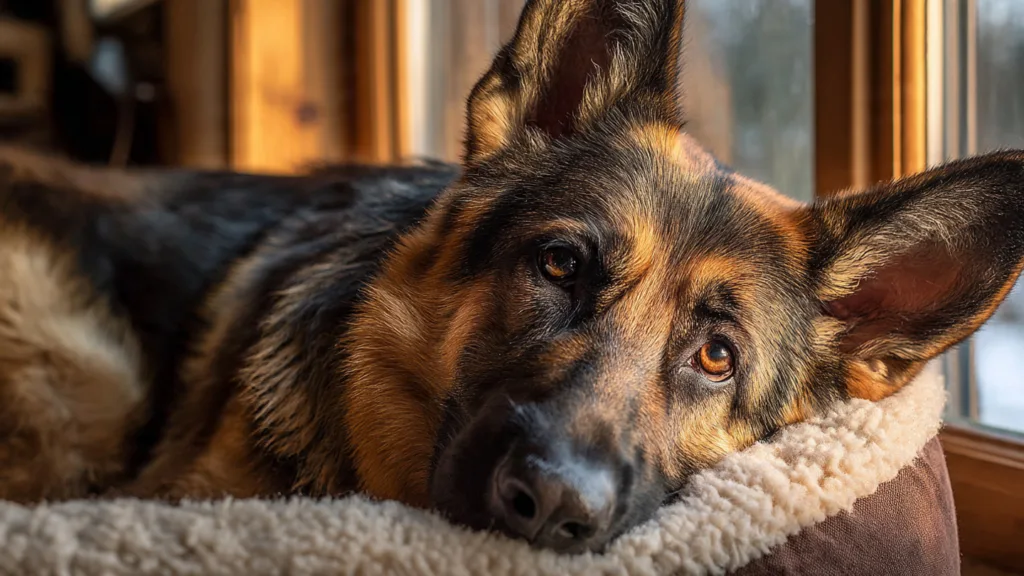
| 4. Cozy Sleeping Areas | Get them off cold floors with orthopedic beds away from drafts. Memory foam makes a huge difference. |
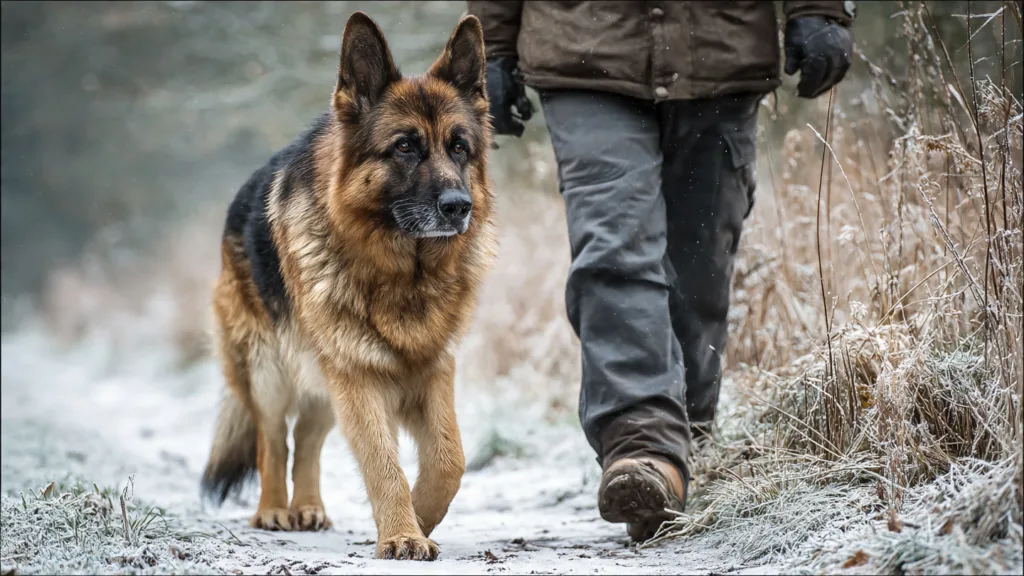
| 5. Paw Care & Traction | Ice between paw pads causes unnatural walking that stresses joints. Keep fur trimmed and consider booties. |
| 6. Weight Management | Winter often means less activity, so adjust food portions accordingly. Extra weight = extra joint stress. |
| 7. Hydration Focus | Heated indoor air dehydrates joints. Make sure fresh water is always available and consider adding wet food. |
Making These Strategies Work in Real Life
Let me break down how I implement these strategies with my current German Shepherd, Max. He’s six years old and has always been prone to stiffness in cold weather.
Morning Warm-Up Routine
Instead of our summer routine where we’d just head out the door, winter mornings look different. While my coffee brews, I do gentle range-of-motion exercises with Max’s legs – just simple extensions and flexions while he’s lying down. Then we walk around the house for a few minutes before facing the cold. This 5-minute routine has eliminated that initial stiffness he used to show when stepping outside.
Supplement Timing Matters
I used to give Max’s joint supplements with dinner, but I noticed he was stiffest in the mornings. My vet suggested switching to morning doses, and it made a noticeable difference. The supplements are working during his most active hours. We use a combination of:
- Glucosamine & chondroitin supplement
- Fish oil for omega-3s
- Green-lipped mussel powder (this was a game-changer!)
Indoor Exercise Creativity
When it’s too cold or icy for long walks, we play “find it” games indoors. I hide treats around the house and have him search for them. This provides mental stimulation and gentle movement without the joint impact of running on hard, frozen ground. Another favorite is practicing obedience commands with high-value rewards – it keeps his mind sharp and body moving safely.
⚠️ Watch Out For: Slippery indoor floors become more dangerous in winter! Use rugs or non-slip mats to prevent your German Shepherd from sliding and injuring themselves. I learned this the hard way when my previous GSD, Luna, slipped on our hardwood floors and strained her wrist.
The Bedding Setup
Max has two beds – one in our bedroom and one in the living room. Both are orthopedic memory foam, and both are placed away from drafts and heating vents. The direct heat from vents can actually dry out joints, while cold drafts cause stiffness. I also added a warm blanket that he can burrow into when he wants extra coziness.
My Bonus Winter Joint Secret
Here’s my favorite tip that most people don’t think about: warm compresses. On particularly cold days or after outdoor activity, I take a warm (not hot) damp towel and gently place it over Max’s hips and back legs for 5-10 minutes. He absolutely loves it, and I can see the relief it provides. It’s like a mini spa treatment for his joints!
The key is making joint care part of your daily routine rather than something you only think about when you see signs of discomfort. Consistency is everything with joint health.
Remember, our German Shepherds depend on us to notice when they’re uncomfortable and to take action. They’re tough dogs who often hide pain until it becomes significant, so being proactive with these strategies can prevent bigger problems down the road.
What’s one joint care strategy that’s worked well for your German Shepherd during these cold months? I’m always looking to learn from other experienced owners!