My German Shepherd Seems Stiff in the Winter. Is This Normal?
Hey there, fellow GSD lover. I’ve been where you are, watching my loyal companion get up a little slower on a cold morning, maybe with a slight groan. That flicker of worry is completely normal. First things first, take a deep breath. You’re not alone in this, and a little stiffness during the colder months is, unfortunately, pretty common for this magnificent breed. Their genetics, combined with the drop in temperature, can definitely make those joints a bit creakier. But the good news is there’s a lot we can do as owners to help them feel more comfortable and stay active.
🩹 Why Winter is Tough on Your Shepherd’s Joints
Think about how your own knees or back might feel when it’s cold and damp. It’s similar for your dog. The cold weather can cause muscles to tighten and stiffen up, providing less support to the joints. On top of that, the barometric pressure changes that often come with winter weather can cause expansion and contraction in the tendons and tissues around the joints, which leads to discomfort. And let’s be honest, when it’s chilly and dark outside, we’re all less inclined to go for long walks, right? That decrease in activity means less circulation and more stiffness for your pup.
Your Action Plan for Winter Joint Support
You don’t need to feel helpless. These are the strategies I’ve used over the years with my own shepherds that have made a real, noticeable difference in their winter comfort.
🏠 Indoor Comfort is Key
Cozy, Draft-Free Bed:
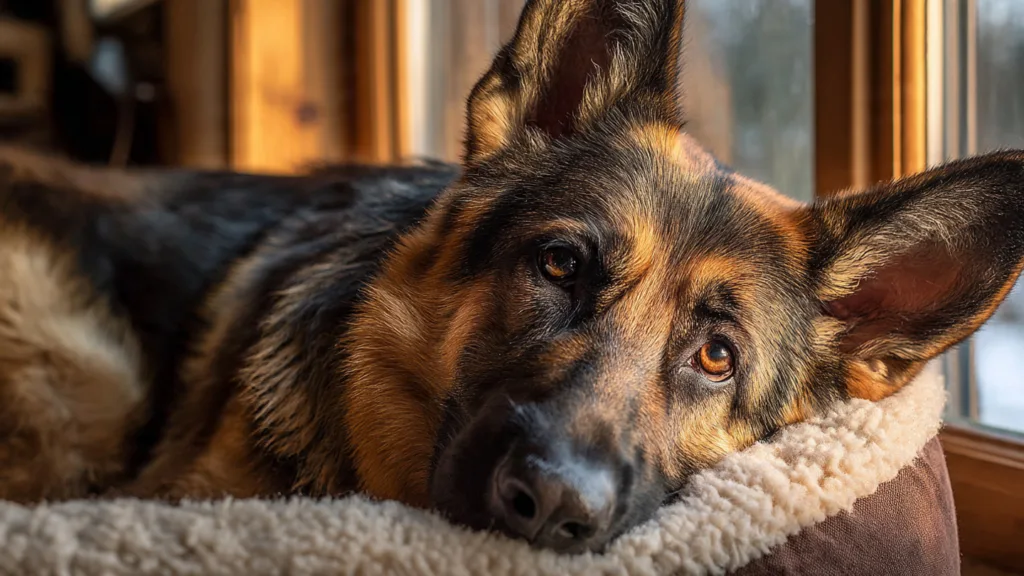
That old, thin bed in the corner isn’t going to cut it. Invest in a high-quality, orthopedic bed that provides plenty of support and cushioning. Place it away from drafty doors or cold tile floors. A heated dog bed (designed for safety) can be an absolute game-changer for soothing achy joints overnight.
Rugs and Carpets:
Slipping on hardwood or tile floors is a major hazard for a dog with joint issues. Lay down non-slip rugs or runners to create safe pathways through your home. This gives them the confidence to move around without fear of their legs sliding out from under them.
Gentle Indoor Play:
When it’s too nasty to go outside, keep them moving indoors. A few minutes of hide-and-seek with a favorite toy or practicing low-impact commands (“sit,” “down,” “spin”) can keep their muscles engaged without the harsh impact.
❄️ Smart Outdoor Management
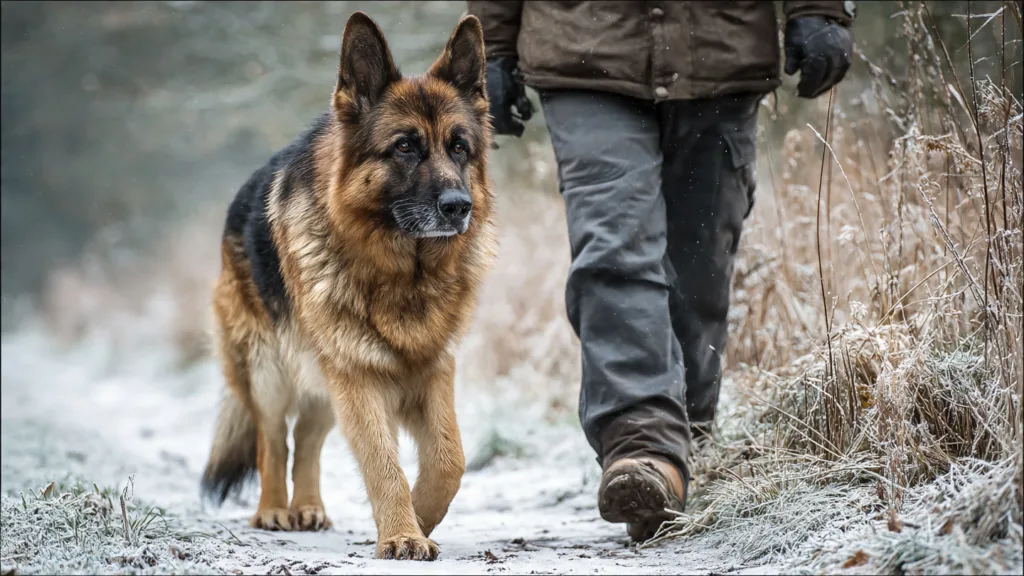
- Warm-Up is Non-Negotiable: Never go straight from a warm house into a full-speed run in the cold. Start with a few minutes of gentle walking to get the blood flowing to those muscles and joints.
- Consider a Jacket: I know, they’re tough dogs, but a simple, waterproof dog coat can help keep their core and muscle groups warm, which in turn supports the joints.
- Paw Care: Ice, snow, and salt can be brutal on their paws, causing them to walk in a strange, uncomfortable way that stresses the joints. Wipe their paws clean after every outing and consider using dog booties or a protective paw balm.
🥣 Nutrition & Supplement Support
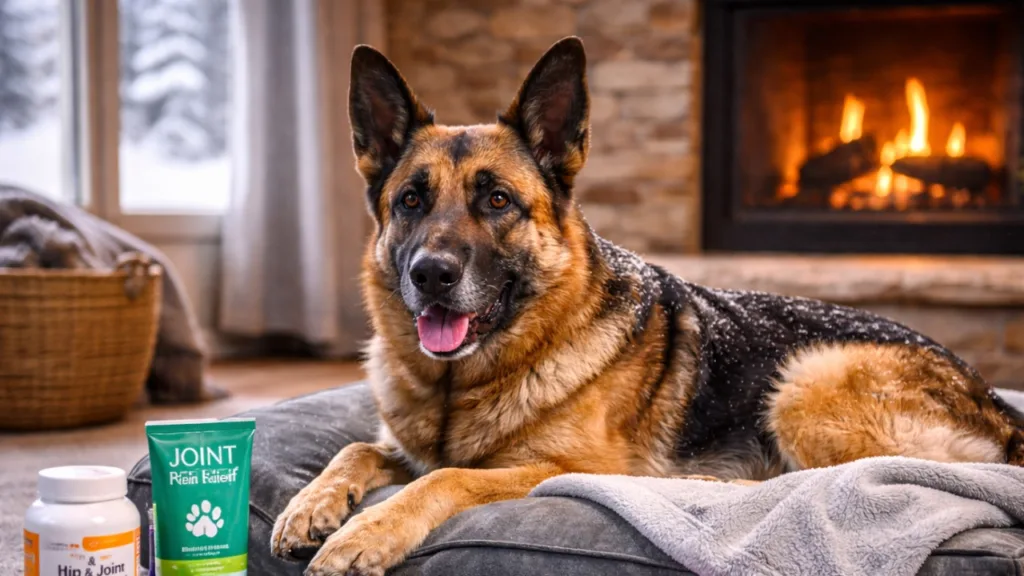
What you put in their bowl matters tremendously. I’m a big believer in the power of targeted supplements, but always chat with your vet first to find the right one and dosage for your dog.
| Supplement | How It Can Help |
|---|---|
| Glucosamine & Chondroitin | These are the building blocks for cartilage. They help maintain and repair joint tissue, which is crucial for a breed prone to hip and elbow dysplasia. |
| Omega-3 Fatty Acids (Fish Oil) | This is a powerhouse for reducing inflammation throughout the body, including in the joints. It can make a noticeable difference in stiffness. |
| MSM (Methylsulfonylmethane) | Another great anti-inflammatory that also helps with pain relief and flexibility. |
Also, keep a close eye on their weight. Every single extra pound puts more strain on their hips, knees, and elbows. Winter is a common time for weight gain due to less activity, so you might need to adjust their food portions slightly.
When It’s Time to Pick Up the Phone and Call Your Vet
While some stiffness can be managed at home, you need to be the detective for your dog. Don’t wait if you notice any of these red flags:
Persistent Limping:
A slight hitch in their step for a minute after waking up is one thing. A consistent limp that doesn’t go away is another.
Whining or Yelping:
If your dog cries out when moving or when you touch a specific area, they are in significant pain.
Drastic Behavior Change:
If your normally food-motivated dog loses their appetite, or your energetic pup suddenly doesn’t want to get up at all, it’s a major signal that something is wrong.
Inability to Get Comfortable:
Pacing, restlessness, and constantly shifting positions can indicate they can’t find a pain-free way to rest.
Building a Foundation for Healthy Joints, Year-Round
The best fight against winter stiffness is a strong offense you build the rest of the year. Consistent, moderate exercise like leash walking and swimming keeps the supporting muscles strong. A high-quality diet and maintaining a lean body condition are absolutely critical. And finally, building a great relationship with your vet means you can tackle small issues before they become big, painful problems.
Seeing your best friend struggle is hard, but you are now armed with a plan. A few simple changes to your routine can make this winter the most comfortable one yet for your loyal shepherd.
What’s the first cozy upgrade you’re going to make for your furry friend? 🐾