
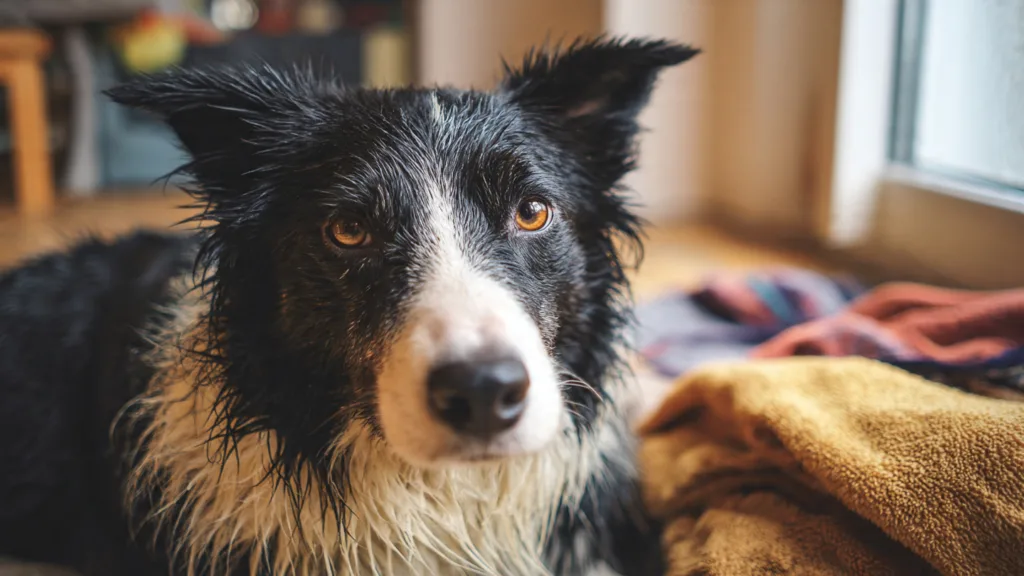
Your Active Partner Feeling the Winter Chill ❄️
Hey there, fellow Border Collie lover. If you’re reading this, you probably know the feeling. That little glance your dog gives you when it’s time for their favorite game of fetch, the sheer joy they get from a good, long run. Our Border Collies aren’t just pets; they’re our energetic, whip-smart partners in crime.
But have you noticed a change as the temperature drops? A slight stiffness when they get up from a nap? Maybe they’re a little more reluctant to jump into the car, or that famous “Collie Crouch” during playtime seems a bit off. Winter can be tough on our active friends. The cold, combined with drier air from indoor heating and often less activity, can really highlight underlying joint issues. It’s our job to help them through it, and I’m here to walk you through it, step-by-step.
Why is My Border Collie Struggling? Understanding the Causes
First things first, it’s not your imagination, and it’s not necessarily a sign of something catastrophic. Joint discomfort in Border Collies, especially in winter, usually comes down to a few key factors.
The Double Whammy of Cold and Dry Air
Think about how your own muscles feel tighter on a cold morning. It’s the same for your dog. Cold weather can cause muscles to stiffen and reduce blood flow to the joints, making any existing discomfort more noticeable. On top of that, we crank up the heat indoors, which dries out the air. This low humidity can dehydrate the cartilage in their joints—the very cushion that’s supposed to keep things moving smoothly.
The “Activity Dip” Cycle
It’s icy, it’s miserable, and walks get shorter. We naturally become less active in winter, and so do our dogs. This creates a cycle: less movement leads to weaker supporting muscles, which in turn provides less stability for the joints. A Border Collie’s body is built for motion, and when that motion decreases, stiffness can set in.
Breed Predispositions
Let’s be real, our brilliant herding dogs are athletic powerhouses, but that doesn’t make them invincible. They can be prone to conditions like hip or elbow dysplasia, and as they enter their adult years (typically from age 5-7 onwards), general wear and tear can start to show up as arthritis. Winter just turns up the volume on these underlying issues.
🩺 When to Ring the Vet: Don’t Play the Guessing Game
While some stiffness can be normal, certain signs warrant a professional opinion. Please call your vet if you notice:
- Sudden, severe limping or an inability to put weight on a leg.
- Visible swelling or heat around a joint.
- A noticeable loss of muscle mass in one leg compared to the others.
- Whining, yelping, or significant behavioral changes (like snapping) when you touch a specific area.
- If the discomfort persists for more than a couple of days, even if it seems mild.
It’s always better to be safe. A proper diagnosis is the first step to an effective management plan.
Your Action Plan: Supporting Those Joints Through Winter
Okay, let’s get practical. Here is a straightforward, step-by-step approach you can start implementing today to make your Border Collie more comfortable.
Step 1: Rethink Their Environment
Small changes at home can make a world of difference.
- Cozy, Orthopedic Bedding: Ditch the thin mat. Get a thick, orthopedic foam bed that distributes weight evenly and relieves pressure on joints. Place it away from cold drafts and heating vents.
- Non-Slip Surfaces: Hardwood and tile floors become ice rinks for a dog with sore joints. Use rubber-backed rugs, yoga mats, or even cheap runner carpets to create safe pathways through your home.
- Ramps are Your Friend: If your dog sleeps on your bed or regularly gets in the car, a sturdy ramp is a game-changer. It prevents the painful impact of jumping up and down.
Step 2: Modify Exercise & Embrace Warm-Ups
We’re not stopping activity; we’re making it smarter.
- The 5-Minute Warm-Up: Before any real exercise, do a gentle walk for at least five minutes. This is non-negotiable in cold weather. It gets the blood flowing to those muscles and joints.
- Shorter, More Frequent Walks: Instead of one long, exhausting walk, try two or three shorter ones. This keeps the joints mobile without overdoing it.
- Swap the Game: Replace high-impact fetch on hard ground with low-impact activities. A short game of “find the treat” indoors or a gentle hike on a soft, natural trail are excellent alternatives.
Step 3: Nutrition & Supplementation
What goes into your dog directly affects how they feel.
- Maintain a Healthy Weight: This is the single most important thing you can do. Every extra pound is several pounds of extra pressure on their joints. Talk to your vet about their ideal weight.
- Consider Joint Supplements: High-quality supplements containing Glucosamine, Chondroitin, and MSM can help support cartilage health. I also swear by Omega-3 fatty acids (from fish oil) for their natural anti-inflammatory properties. Always chat with your vet before starting any new supplement.
| What to AVOID in Winter | What to EMBRACE Instead |
|---|---|
| High-impact fetch on frozen ground | Sniffing games or puzzle toys indoors |
| Long periods of inactivity | Short, frequent walks on soft surfaces |
| Letting them shiver on cold floors | A warm, supportive bed in a draft-free zone |
| Sudden, intense exercise without a warm-up | A gentle 5-minute walk before any activity |
Step 4: The Power of Hands-On Care
Don’t underestimate your touch.
- Gentle Massage: After a walk, when your dog is relaxed, gently massage the muscles of their legs, shoulders, and hips. Use slow, circular motions. You’re not deep-tissue massaging; you’re promoting relaxation and circulation. Watch their body language—if they lean into it, you’re on the right track.
- Consider a Canine Coat: A simple, well-fitting dog coat can help keep their core and muscle groups warm during outdoor potty breaks and short walks, reducing overall stiffness.
Final Words of Encouragement
Seeing your vibrant Border Collie slow down is hard. But remember, you are not powerless. By understanding the “why” and taking these proactive, manageable steps, you can dramatically improve your dog’s comfort and quality of life during the winter months. It’s about working with their body, not against it. You’ve got this.
A Season of Comfort, Not Discomfort
Winter doesn’t have to be a season of worry and watching your best friend struggle. With a warm bed, smart exercise, the right nutritional support, and a lot of love, you can help your Border Collie navigate the colder months with much greater ease. It’s about being observant, proactive, and making those small adjustments that add up to a big difference. You know your dog better than anyone, and your attentive care is the best medicine they could ever have.
I’d love to hear from you—what’s one small change you’ve made this winter that your Border Collie seems to really appreciate?