
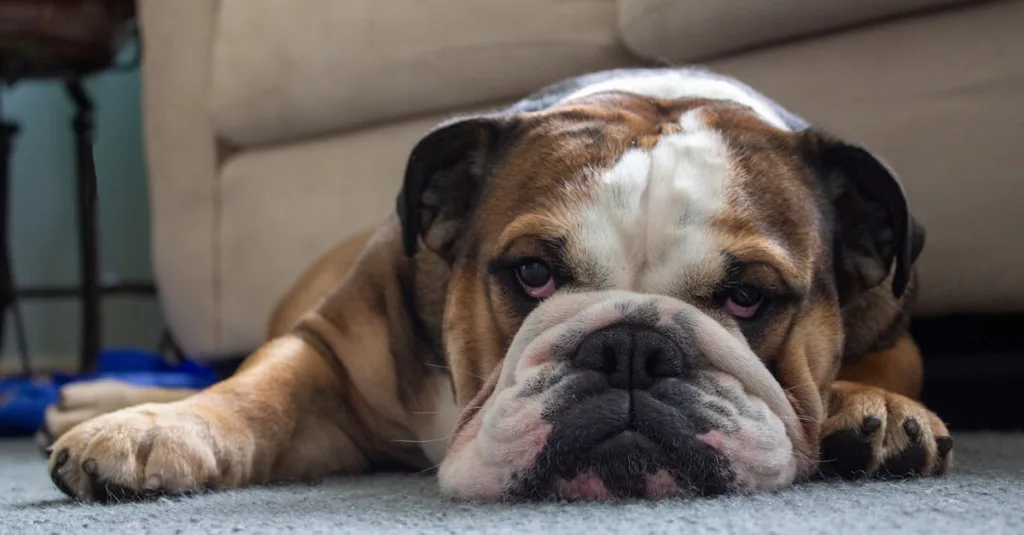
My English Bulldog Seems Stiffer in Winter. Is This Normal?
Hey there, fellow bulldog parent. If you’re noticing your sturdy friend is a bit more reluctant to get up, seems to « warm up » slowly on walks, or is even licking at their knees and hips more, you’re not imagining things. First off, take a deep breath. What you’re seeing is incredibly common, especially with our beloved bulldog anglais and the chilly hiver months. Their unique, heavy build puts natural stress on their articulations, and cold weather can make any underlying stiffness feel so much worse. It’s like how our own knees might ache when the temperature drops. The good news? There’s a ton we can do at home to make them more comfortable. Think of yourself as your dog’s personal comfort coach.
🛋️ Quick Comfort Tip: If your bulldog anglais chien senior loves their bed on a tile floor, slide a thick rug or a foam play mat underneath it this winter. That simple barrier against the cold floor can make a world of difference for their articulations overnight.
Your Winter Action Plan for Happy Bulldog Joints
Winter calls for a shift in strategy. It’s less about high activity and more about smart, consistent support. Here’s your game plan, broken down into simple, actionable steps.
| 🏠 Environment & Comfort | This is your first line of defense. Keep your home comfortably warm and avoid drafts. Get orthopedic or memory foam beds—the thicker, the better. I use one in the living room and one in the bedroom so my guy never has to sleep on a hard surface. For senior dogs, consider a low-entry bed or a sturdy ramp for the couch (if they’re allowed!). |
| 🚶 Movement & Exercise | Consistency is key! Shorter, more frequent walks are better than one long, exhausting one. Aim for a gentle stroll when the sun is warmest. Indoor play with a slow-moving snuffle mat or light training sessions keeps their mind and body active without the cold stress. Always start with a gentle 5-minute warm-up walk before any play. |
| 🥘 Diet & Supplements | Winter often means less activity, so watch those calories to avoid extra weight stressing the joints. Talk to your vet about adding a joint supplement. I’ve had great success with ones containing glucosamine, chondroitin, and MSM. Omega-3 fatty acids (from fish oil) are also fantastic for reducing inflammation. It’s a daily investment in their mobility. |
| ✋ Hands-On Care | Learn a gentle massage routine for their legs and back. Just 5 minutes in the evening while you’re watching TV can increase circulation and ease stiffness. Also, keep those paw pads clean and dry from ice-melt chemicals, and consider a doggy coat for extra warmth on walks. |
When to Pick Up the Phone and Call Your Vet
Our at-home care is powerful, but it’s not a substitute for professional medical advice. You know your bulldog best. If you notice any of the following, it’s time to schedule a check-up:
- Sudden limping or favoring one leg that lasts more than a day or two.
- Whining, yelping, or noticeable agitation when touched in a specific area.
- Significant change in appetite or energy level (more than just winter laziness).
- Difficulty standing up or lying down, or struggling with stairs they used to handle.
- Any swelling or unusual warmth around a joint.
A visit might lead to pain management options, physical therapy recommendations, or a diagnosis like arthritis, which you can then manage proactively. It’s always better to be safe.
⚠️ Winter Warning: Be extra careful on icy walks! A slip and fall can cause a sudden, serious joint injury. If it’s icy outside, opt for indoor mental games instead. Their safety is more important than the walk.
Building a Foundation for Long-Term Joint Health
Prevention is the ultimate goal. Keeping your bulldog at a healthy weight is the SINGLE most important thing you can do for their joints, year-round. Regular, low-impact exercise (like swimming in warmer months) keeps muscles strong to support those joints. Stick with their supplement regimen even when they seem fine—it’s about long-term support. And finally, make vet check-ups a routine, especially as they enter their senior years, so you can catch any changes early.
Seeing your bulldog stiff can tug at your heartstrings, but with these focused steps, you can dramatically improve their comfort this winter. It’s all about adapting to the season with a little extra warmth, a little extra care, and a lot of love.
What’s the one small change you’ve made this winter that your bulldog seems to love the most? Sharing our experiences helps us all become better pet parents!

