My Abyssinian Seems Stiff and Uncomfortable in Winter. Is This a Joint Emergency?
First, take a deep breath. If you’re noticing your usually energetic Aby is moving a bit slower, hesitating before jumping, or seems less playful during these cold months, you’re not alone. Winter can be tough on our sleek, athletic friends. The combination of colder temperatures and lower activity can make minor joint sensitivities much more noticeable. It’s a common concern for owners of this active breed. While it can be scary to see your cat in discomfort, this doesn’t necessarily mean a full-blown emergency. The key is to calmly assess the situation and take smart, immediate steps to help them feel better.
Immediate Actions to Soothe Your Aby’s Winter Joint Discomfort
Think of this like you would for yourself on a cold, achy morning. Your goal is to provide warmth, comfort, and gentle support. Here’s exactly what you can do right now:
🛋️ 1. Create Warm, Cozy Zones
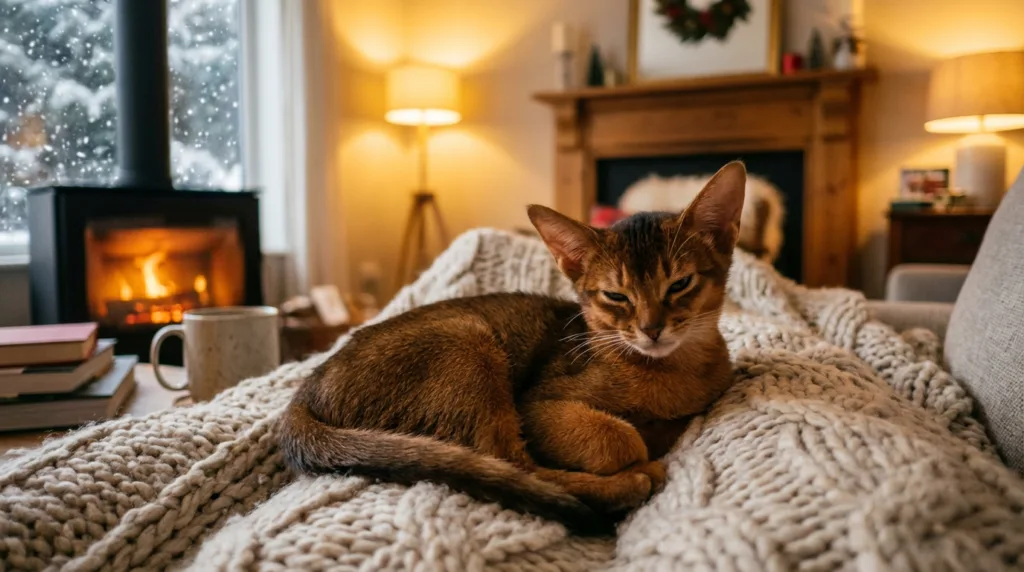
Abyssinians love warmth, and their joints do too. Cold floors and drafts are the enemy.
- Elevated, Padded Beds: Place plush beds or thick blankets in their favorite sunny spots, away from drafty windows or floors. A heated cat bed (set on low and with a removable cover for safety) can be a game-changer.
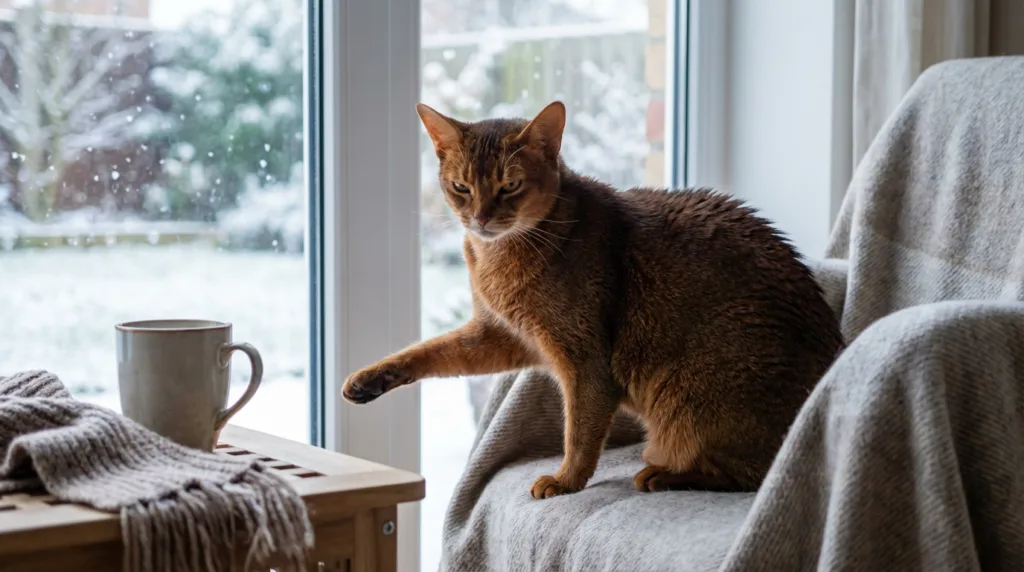
- Ramp Access: If your Aby loves watching birds from a windowsill or cuddling on your bed, provide a makeshift ramp. A sturdy plank of wood covered with a rug for traction can help them avoid painful jumps.
- Mind the Heat Vents: Ensure they aren’t sleeping directly on overly hot heating vents, which can be drying and uncomfortable.
⚡ 2. Encourage Gentle Movement
It might seem counterintuitive, but gentle activity keeps joints lubricated. The trick is low-impact play.
- Ground Play: Drag a wand toy slowly along the carpet so they can stalk and pounce without a big leap. Roll a ball gently for them to chase.
- Short, Frequent Sessions: Aim for three 5-minute play sessions spread through the day rather than one intense 15-minute frenzy.
- Food Puzzles: Use puzzle feeders to make mealtime active. This engages their brilliant mind and gets them moving their body gently to get their kibble.
🍖 3. Review Diet & Supplements (With Vet Guidance!)
Nutrition plays a huge role. Do not give any human supplements.
| What to Consider | Why It Helps |
|---|---|
| Maintain a Healthy Weight | Every extra ounce puts more stress on delicate joints. Winter is a key time to watch portion sizes. |
| Omega-3 Fatty Acids | Found in quality fish oils (vet-recommended), these are natural anti-inflammatories. |
| Joint-Specific Diets/Supplements | Formulations with Glucosamine & Chondroitin. Always talk to your vet first for the right product and dose for your cat. |
When This IS a Veterinary Emergency: Red Flags
While winter stiffness is common, some signs mean you need to pick up the phone immediately. Trust your gut—you know your Aby best.
- Sudden Inability to Bear Weight: They are holding a leg up completely and won’t touch it to the floor.
- Loud Crying or Hiding: Obvious signs of severe pain, like vocalizing when touched or moving.
- Swelling or Heat in a Limb: A joint looks visibly larger or feels warm compared to the others.
- No Improvement with Warmth/Rest: The stiffness and reluctance to move persist even in a warm, cozy environment after 24 hours.
- Loss of Appetite or Litter Box Accidents: Not eating or having trouble getting into the box are major distress signals.
If you see any of these, don’t wait. Call your vet or the emergency clinic. It’s always better to be safe.
Building a Joint-Healthy Lifestyle for Every Winter
Prevention is your best tool. Making a few habits part of your routine can keep your Aby springy for years.
- Year-Round Weight Management: Keep them sleek and muscular. Feel for their ribs, you should easily feel them under a thin layer of fat.
- Consistent, Moderate Play: Make play a daily ritual, even in summer, to maintain strong supporting muscles.
- Environmental Modifications: Consider permanent steps like carpeted stairs to their favorite perches or low-entry litter boxes as they age.
- Regular Vet Check-ups: Annual exams can catch early signs of arthritis or other issues before they become painful problems.
Let’s Chat Abys!
What’s one quirky way your Abyssinian seeks out warmth during the winter? Do they have a favorite blanket or a secret spot by the heater? Sharing our experiences helps us all become better pet parents! Drop your story below. 👇