Winter Woes: Keeping Your Beagle Cozy When the Temperature Drops
Hey there, fellow Beagle lover! If you’re reading this, you probably know that look – the one where your usually energetic hound gives you those big, sad “brown eyes” from a chilly spot on the floor, or maybe your Beagle puppy is shivering after a quick potty break. I’ve been there with my own pack over the years. Winter brings a unique set of challenges for our scent-driven, short-haired friends. While they’re tough little dogs, they absolutely feel the cold, especially puppies and seniors. It’s not just about comfort; it’s about their health and safety. So, let’s huddle up and talk about the top cold-weather concerns for Beagles and, more importantly, how to turn your home into a warm, safe haven for your furry family member this winter.
- Winter Woes: Keeping Your Beagle Cozy When the Temperature Drops
- 8 Chilly Challenges Your Beagle Faces in Winter
- 1. That Thin Coat Isn't Built for Blizzards
- 2. Dry, Cracked Paw Pads
- 3. The "Sniff & Freeze" Dilemma on Walks
- 4. Indoor Drafts and Cold Floors
- 5. Overheating from Inconsistent Home Heating
- 6. Weight Gain from "Hibernation" Mode
- 7. Antifreeze Poisoning (A Silent Killer)
- 8. The Wintertime Blues (Yes, Dogs Get Them Too!)
- Bonus Tip: The Pre-Walk Warm-Up & Post-Walk Cooldown
8 Chilly Challenges Your Beagle Faces in Winter
1. That Thin Coat Isn’t Built for Blizzards
Let’s start with the obvious. Beagles have a short, dense double coat that’s great for repelling water and dirt, but it’s no match for prolonged exposure to freezing temps. Unlike a Husky, they don’t have a built-in parka. A Beagle puppy has an even less developed coat and less body fat, making them extra vulnerable. You’ll notice the signs: shivering, reluctance to go outside, or curling up tightly into a ball to conserve heat.
- Concrete Example: My boy, Duke, would do a “paw dance” on cold pavement, lifting his feet one after the other. That was my first clue he needed boots for our walks.
- Simple Solution: Invest in a good-quality sweater or coat for outdoor excursions. Look for one that covers from the neck to the base of the tail and has a soft, warm lining.
2. Dry, Cracked Paw Pads
Snow, ice, and worst of all, road salt and chemical de-icers are brutal on sensitive paw pads. They can cause painful cracking, burns, and irritation. Plus, your Beagle will likely lick their paws afterward, ingesting harmful chemicals.
- Concrete Example: After a walk, I found little red stains in the snow from where my Beagle’s paws had tiny cracks. It was a wake-up call.
- Simple Solution: Paw protection is non-negotiable. Use dog boots or a protective wax balm before going out. Always wipe their paws (and belly!) with a warm, damp cloth when they come back inside to remove all salt and residue.
3. The “Sniff & Freeze” Dilemma on Walks
Ah, the Beagle nose. It’s their greatest joy and, in winter, a potential hazard. They can get so engrossed in a fascinating frozen scent trail that they ignore how cold they’re getting. Before you know it, they’re stiff and shivering, but still refusing to come inside!
Strategy: Switch to shorter, more frequent walks. Keep them moving to generate body heat, and be the decision-maker—don’t wait for them to tell you they’re cold. A 15-minute brisk walk is better than a 45-minute sniffari in sub-zero wind chill.
4. Indoor Drafts and Cold Floors
Your home might feel cozy to you, but think like a low-to-the-ground dog. Tile, laminate, and hardwood floors are icy on their bellies. Drafts from windows or doors create cold spots in their favorite sleeping areas.
- Concrete Example: I noticed my old girl, Daisy, had stopped sleeping in her usual corner. I felt the floor there and found a massive draft coming from the baseboard. She was smarter than me!
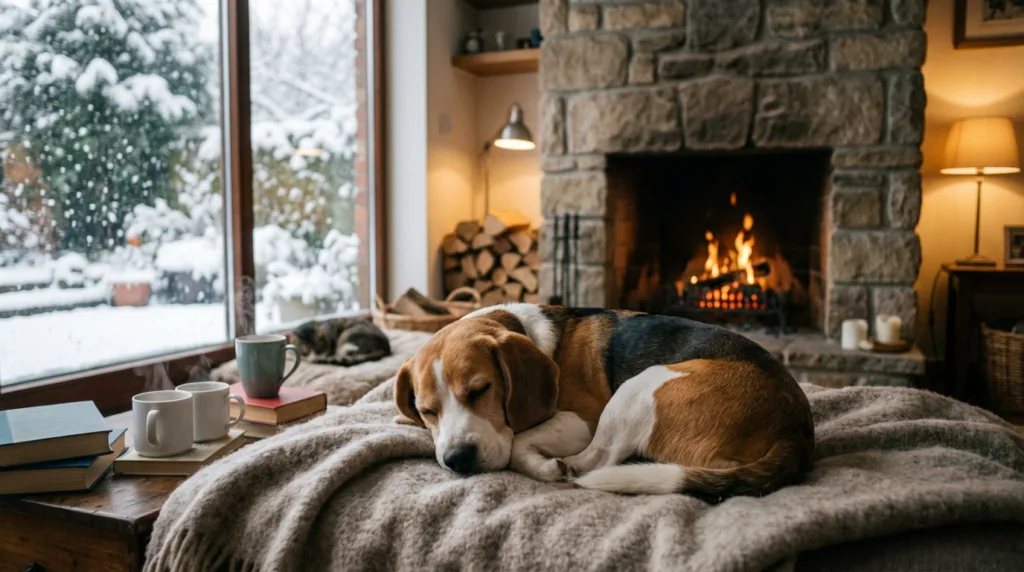
- Simple Solution: Provide plenty of insulated, raised beds or thick, plush mats placed away from drafts. A simple blanket in their crate can make a world of difference. Consider a self-warming pet mat for their favorite snooze spot.
5. Overheating from Inconsistent Home Heating
This is a sneaky one. We crank up the chauffage to combat the cold, but then the air gets extremely dry. Beagles can get dehydrated and have dry, itchy skin. Also, if they lie right next to a heat vent or fireplace, they can overheat or even risk a burn.
Strategy: Use a humidifier to add moisture back into the air. Make sure fresh water is always available. Place pet beds at a safe distance from direct heat sources and use fireplace guards.
6. Weight Gain from “Hibernation” Mode
With shorter days and colder weather, both you and your Beagle’s activity levels naturally drop. Less outdoor play and shorter walks, combined with the same amount of food, is a fast track to packing on winter pounds. And extra weight is hard on their joints.
| Winter Trap | Active Solution |
|---|---|
| Shorter, less frequent walks | Indoor games: hide-and-seek with treats, short training sessions, flirt pole play. |
| Boredom eating | Use puzzle feeders and slow-feed bowls to make mealtime engaging and longer. |
| Less calorie burn | Talk to your vet about possibly slightly reducing food portions if activity plummets. |
7. Antifreeze Poisoning (A Silent Killer)
This is the most serious point. Antifreeze (ethylene glycol) leaks from cars and tastes sweet, attracting dogs. Even a tiny amount can cause fatal kidney failure. Symptoms include drunken behavior, vomiting, excessive thirst, and seizures.
🚨 WHEN TO CONSULT A VETERINARIAN IMMEDIATELY: If you suspect your Beagle has ingested any antifreeze, this is a life-threatening emergency. Do not wait for symptoms. Rush them to the vet or emergency clinic. Prevention is key: check your garage and driveway for leaks, and clean up any puddles immediately.
8. The Wintertime Blues (Yes, Dogs Get Them Too!)
Less sunlight and fewer stimulating outdoor adventures can lead to a lethargic, mopey Beagle. You might see more napping, less interest in play, or even mild anxiety.
Strategy: Fight the gloom with engagement! New indoor toys, 5-minute training refreshers on old tricks, and even just cuddle time on the couch can boost their mood. Try to walk during the brightest part of the day for a dose of sunshine for both of you.
Bonus Tip: The Pre-Walk Warm-Up & Post-Walk Cooldown
Think of it like an athlete. Don’t just bolt out the door into the cold. Spend a minute indoors doing some gentle stretches (encourage play bows, gentle “dancing”) to get the blood flowing. When you come back in, that thorough paw wipe isn’t just for cleaning; it’s a massage that checks for injuries and helps them warm up. Follow it up with a snuggle in a warm blanket. This routine signals comfort and safety to your pup.
Winter with a Beagle doesn’t have to be a season of worry. It can be a wonderful time for cozy bonding. By being proactive about their warmth, paw care, and indoor stimulation, you’ll ensure your furry friend stays happy, healthy, and warm until the spring thaw. Now, I’d love to hear from you! What’s your Beagle’s favorite way to stay cozy on a cold day? Do they have a special sweater or a go-to spot by the heater? Share your stories in the comments below!