Dog / English Bulldog / Winter Care
Keeping Your English Bulldog Cozy: Your Winter Survival Guide ❄️
Hey there, fellow bulldog lover. If you’re reading this, you’re probably looking out your window at a frosty scene and wondering how your snorting, wrinkly best friend is going to handle it. I’ve been through many winters with my own bulldog, Winston, and let me tell you, these charming couch potatoes are not built for the cold. Their short coats, compact airways, and love for warmth make winter a season that requires a little extra planning from us owners. But don’t worry! With some simple steps, you can ensure your bulldog stays safe, warm, and happy all winter long. Let’s dive in.
Why Winter is a Challenge for Your Bulldog
It’s not just in your head – your English Bulldog feels the cold more than many other breeds. Here’s why:
That Short, Single Coat
Unlike double-coated breeds like Huskies, your bulldog’s fur is short and lies close to the skin. It’s more for show than for insulation! It provides minimal protection against wind and moisture, meaning the cold gets to their skin much faster.
Brachycephalic (Short-Nosed) Anatomy
This is the big one. Their adorable squished faces and shortened airways mean their bodies aren’t as efficient at regulating temperature. Cold air is harsh on their sensitive respiratory tract, and panting (their main way to cool down) in frigid air can be uncomfortable and even risky.
Low Activity & Ground Clearance
Let’s be real, most bulldogs aren’t marathon runners. Lower activity in winter means they generate less body heat. Plus, their low-to-the-ground bellies and chests are the first things to hit cold floors, snow, and slush, leading to a rapid loss of body heat.
Your Step-by-Step Winter Action Plan
Think of this as your winter checklist. Tackle these areas, and you’ll have a content, cozy bulldog.
Step 1: Gear Up for the Great Outdoors
Outdoor time is still important for potty breaks and mental stimulation, but it needs to be managed.
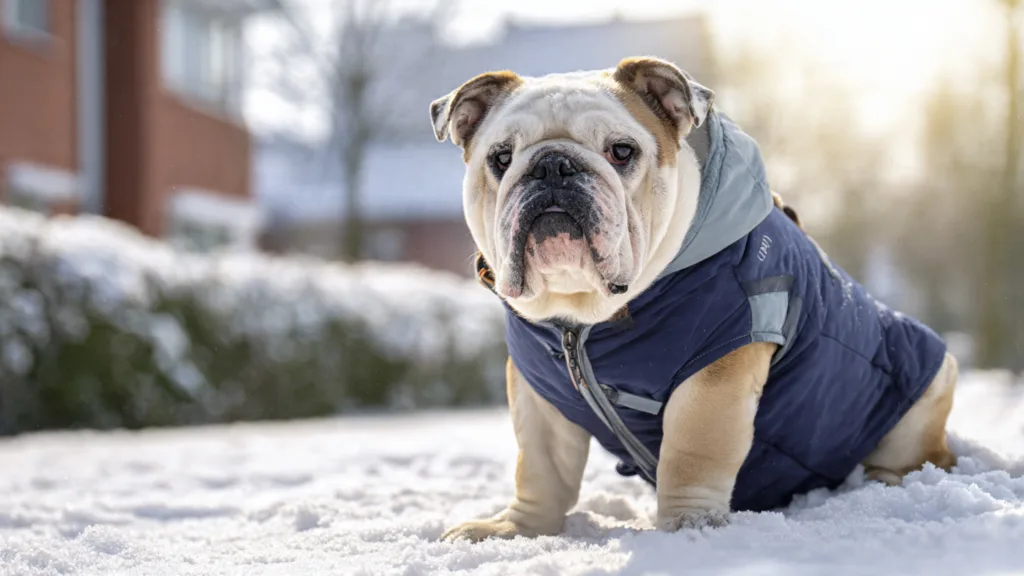
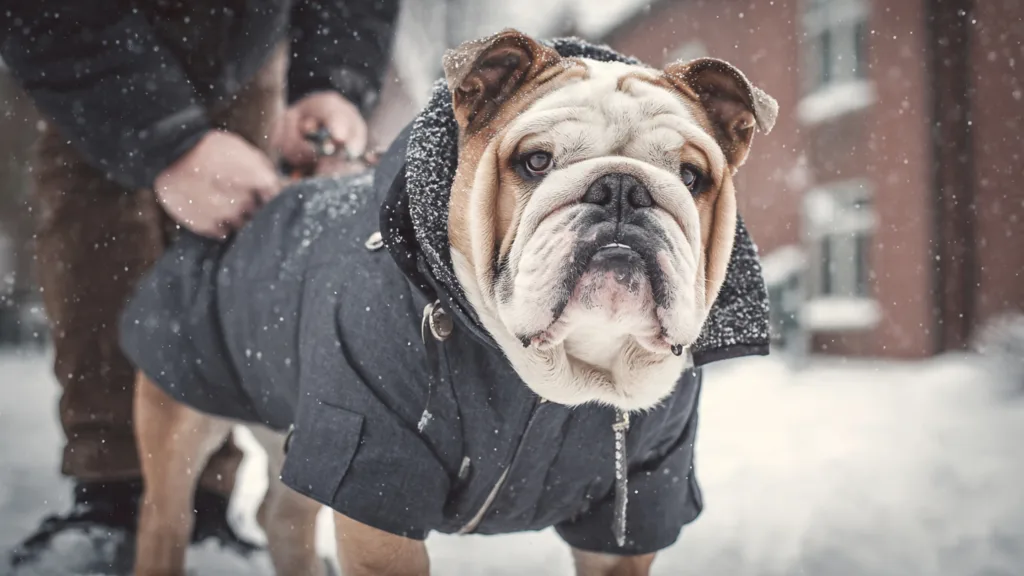
- The Essential Coat: Don’t skip this. A good waterproof and wind-resistant dog coat that covers from neck to tail is non-negotiable. For really cold or wet days, look for one with a fleece lining. I found a puffy vest-style one works great for Winston without restricting his shoulders.
- Paw Protection is a Must: Ice, snow, and road salt are brutal on paw pads. Musher’s Secret paw wax is a game-changer—it creates a protective barrier. For longer walks, consider soft booties. Always wipe their paws and belly with a warm, damp cloth when they come inside to remove salt and chemicals.
- Short & Sweet Potty Breaks: Swap one long walk for two or three very short, purposeful outings. If it’s below freezing (32°F/0°C), keep it under 10 minutes. Use a leash even in your yard—if they get cold, they might try to bolt back inside unexpectedly.
Step 2: Create a Warm Indoor Sanctuary
Your home is their haven. Make it extra welcoming.
- Draft-Free Bedding: Move their bed away from doors, windows, and drafty floors. Elevate it slightly or use a thick, orthopedic bed with bolsters. Add a soft, washable blanket they can burrow into.
- Beware of Heat Sources: Bulldogs are famous for baking themselves in front of space heaters or fireplaces. Supervise closely! Use safety gates around fireplaces and ensure space heaters are tip-proof and have an auto-shutoff. Their skin can dry out and they can overheat or even get burned without realizing it.
- Humidity Matters: Indoor heating dries out the air, which can irritate those already-sensitive nasal passages and skin. A simple humidifier in the main living area can make breathing easier for them (and you!).
Step 3: Adjust Food & Activity
Winter routines shift, and so should their care.
| Consideration | Action to Take |
|---|---|
| Activity Level | It will likely drop. Focus on indoor enrichment: short training sessions for treats, puzzle toys, hide-and-seek with a favorite toy, or gentle indoor fetch in a hallway. |
| Calorie Intake | If outdoor exercise decreases significantly, you may need to slightly reduce their food portion to prevent winter weight gain. Consult your vet for the right amount. |
| Hydration | Keep fresh water available at all times. Dry air and heating can lead to dehydration just as easily as summer heat. |
Key Winter Wellness Tips & When to Call the Vet
A little vigilance goes a long way in preventing big problems.
Skin & Wrinkle Care
Dry heat and cold can cause cracked paw pads and irritate their iconic skin folds. After paw-wiping, check between their toes and pads for cracks. Keep those facial wrinkles clean and dry to prevent painful infections. A dab of vet-approved balm on a dry nose can help too.
Spotting Signs of Distress
Know the signals that your bulldog is too cold:
- Whining, anxiety, or stopping during a walk.
- Shivering or trembling (though some bulldogs shiver when excited, learn your dog’s normal).
- Lifting paws off the ground repeatedly.
- Seeking shelter or trying to turn back home.
If you see these, get them inside immediately.
Wrapping Up: Embrace the Snuggles
Winter with an English Bulldog is really about embracing their inner homebody. It’s the season of extra snuggles on the couch, watching the snow fall together, and enjoying the quiet companionship. By being proactive with their coat, paw care, and indoor environment, you’re not just managing the cold – you’re creating a winter full of warm, happy memories with your best friend.
So, as the temperature drops, see it as your cue to slow down and enjoy the simple joys of bulldog ownership. They remind us that sometimes the best activity is a cozy nap. Now, I’d love to hear from you! What’s your bulldog’s favorite winter cozy spot in your house? Share your stories in the comments below!