
🐾 Introduction
Spring is a fresh start for you, but for fleas and parasites, it’s the beginning of peak season.
If you own a German Shepherd, this is the time to be extra careful.
👉 Fleas don’t just cause itching.
They can quickly turn into a full-blown infestation, affecting your dog, your home, and even your health.
In this guide, you’ll learn how to recognize early signs of fleas, understand the risks, and most importantly, how to protect your German Shepherd effectively.
⚠️ Why Fleas and Parasites Are a Serious Spring Threat
As temperatures rise, fleas and other parasites become highly active.
The most common spring parasites:
- Fleas
- Ticks
- Mites
👉 Fleas are especially dangerous because they:
- Multiply extremely fast
- Spread easily in your home
- Are hard to eliminate once established
🧠 Why German Shepherds Are at Higher Risk
German Shepherds have:
- Thick double coats
- Dense underfur
👉 This makes it easier for fleas to:
- Hide
- Reproduce unnoticed
- Avoid detection
By the time you see the problem… it may already be serious.
🔍 7 Signs of Fleas in German Shepherds
Early detection is critical.
Watch for these symptoms:
- Excessive scratching or biting
- Restlessness or discomfort
- Small black specks (flea dirt)
- Red or irritated skin
- Hair loss in patches
- Biting at tail or lower back
- Visible fleas moving in the coat
👉 Check especially:
- Base of the tail
- Belly
- Neck area
🚨 What Happens If You Don’t Act Fast
A small flea problem can escalate quickly.
Possible consequences:
- Skin infections
- Allergic reactions (flea allergy dermatitis)
- Severe itching and stress
- Infestation in your home
👉 Fleas lay eggs that spread into:
- Carpets
- Bedding
- Furniture
🛡️ Best Flea Prevention Tips for German Shepherd Owners
Prevention is always easier than treatment.
1. Use Preventative Treatments Regularly
Options include:
- Spot-on treatments
- Oral medications
- Flea collars
👉 Choose reliable, vet-approved products for consistent protection.
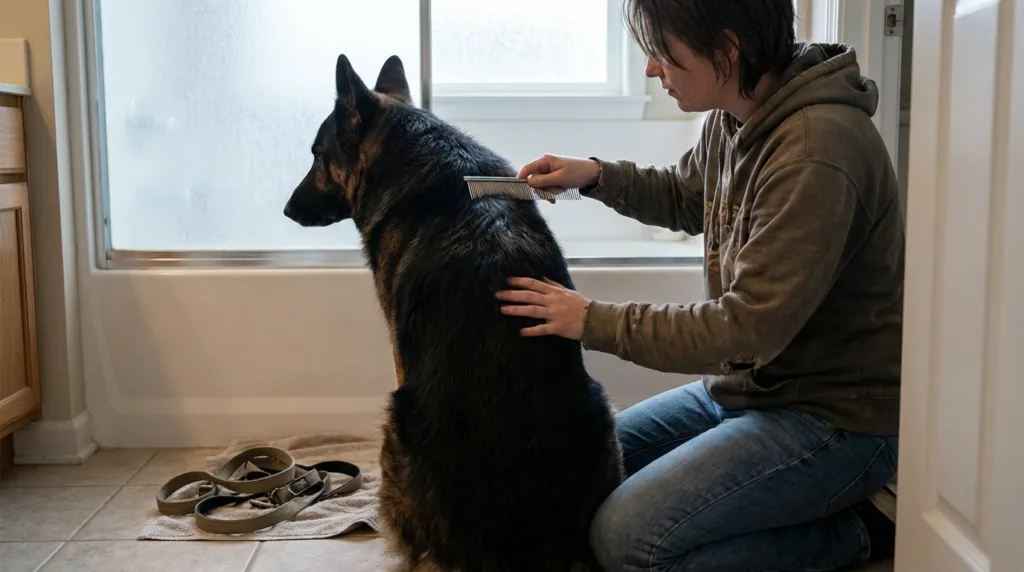
2. Brush Your Dog Frequently
Brushing helps:
- Detect fleas early
- Remove debris
- Keep coat healthy
👉 Especially important during shedding season.
3. Bathe Your Dog When Needed
Use:
- Dog-safe flea shampoos
👉 Avoid overbathing, which can irritate the skin.
4. Clean Your Home Thoroughly
If fleas are present:
- Vacuum carpets and furniture
- Wash bedding (hot water)
- Clean dog sleeping areas
👉 This step is essential to stop reinfestation.
5. Maintain Your Yard
Reduce flea habitats:
- Mow grass regularly
- Remove debris
- Avoid shaded, damp areas
👉 Outdoor control is just as important as indoor.
6. Check Your Dog After Every Walk
Focus on:
- Legs
- Belly
- Tail
👉 Early detection saves a lot of trouble.
⚠️ Natural Remedies: Do They Work?
Some natural options exist (like essential oils or sprays), but:
👉 They are often less effective than medical treatments.
Use them only as a complement, not a replacement.
🏥 When to See a Vet
Seek professional help if:
- Infestation is severe
- Your dog develops skin wounds
- Symptoms don’t improve
- Your dog shows signs of allergy
👉 Flea-related issues can escalate quickly.
❗ Common Mistakes to Avoid
- Waiting too long to act
- Treating only the dog (and not the home)
- Skipping preventative treatments
- Using incorrect or unsafe products
👉 These mistakes lead to recurring infestations.
🧩 Final Thoughts
Fleas and parasites are a normal part of spring, but they don’t have to become a problem.
👉 The key is simple:
- Prevent early
- Check regularly
- Act quickly
With the right routine, your German Shepherd can stay comfortable, healthy, and flea-free all season long.
🔎 FAQ
How do I know if my German Shepherd has fleas?
Look for scratching, flea dirt, red skin, and visible insects in the coat.
Can fleas live in my house?
Yes, eggs can spread into carpets, furniture, and bedding.
What is the best flea prevention for dogs?
👉 Vet-approved treatments combined with regular cleaning and checks.