Your German Shepherd’s Winter Joints: A Survival Guide
Hey there, fellow German Shepherd owner. If you’re like me, you’ve watched your loyal companion leap, run, and play with a grace that seems to defy their size. But as the years go by, and especially when the cold winter months roll in, you might start to notice a slight change. That once-effortless spring up onto the couch becomes a hesitant hop. The morning stretch is a little longer, accompanied by a soft groan. I’ve been there with my boy, Max, and I know how worrying it can be.
Winter is a tough season for our big, active buddies. The cold weather, combined with drier air from indoor heating and a natural drop in activity, can really do a number on their joints. But don’t worry, it’s not a life sentence of discomfort for your furry friend. With a little knowledge and some proactive steps, you can make a world of difference in their comfort and mobility this winter. Let’s dive in.
Why Winter is Tough on Your GSD’s Joints
First, it helps to understand what’s going on inside your dog. Think of their joints, like the hips and elbows, as having a natural cushioning—the cartilage and synovial fluid. This fluid is like the body’s own premium motor oil. Now, here’s how winter throws a wrench in the works:
- The Cold: Cold temperatures can cause the fluid in the joints to thicken a bit. This means joints aren’t as lubricated and can feel stiffer, especially first thing in the morning or after a nap. It’s the same reason we humans feel a bit creakier on a chilly day.
- Barometric Pressure Changes: You know how some people can “feel” a storm coming in their knees? Dogs can experience this too. A drop in atmospheric pressure, common in winter, can cause tissues around the joints to expand slightly, which can press on nerves and increase pain.
- Forced Inactivity: Let’s be honest, when it’s freezing and gloomy outside, our walk schedules can get a little… relaxed. This decrease in movement means less blood flow to the muscles and joints, leading to more stiffness. It’s a vicious cycle: their joints hurt, so they move less, which makes their joints hurt even more.
- Indoor Heating: While we’re cozy inside with the heat on, the dry air can lead to mild dehydration if we’re not careful. Proper hydration is crucial for maintaining that all-important joint fluid.
A Step-by-Step Action Plan for Healthier Winter Joints
Tackling this issue is about being consistent and creating a supportive routine. You don’t need to do everything at once, but incorporating even a few of these steps can bring noticeable relief.
Step 1: Create a Joint-Friendly Indoor Environment
Your home is their sanctuary, so let’s make it a comfortable one.
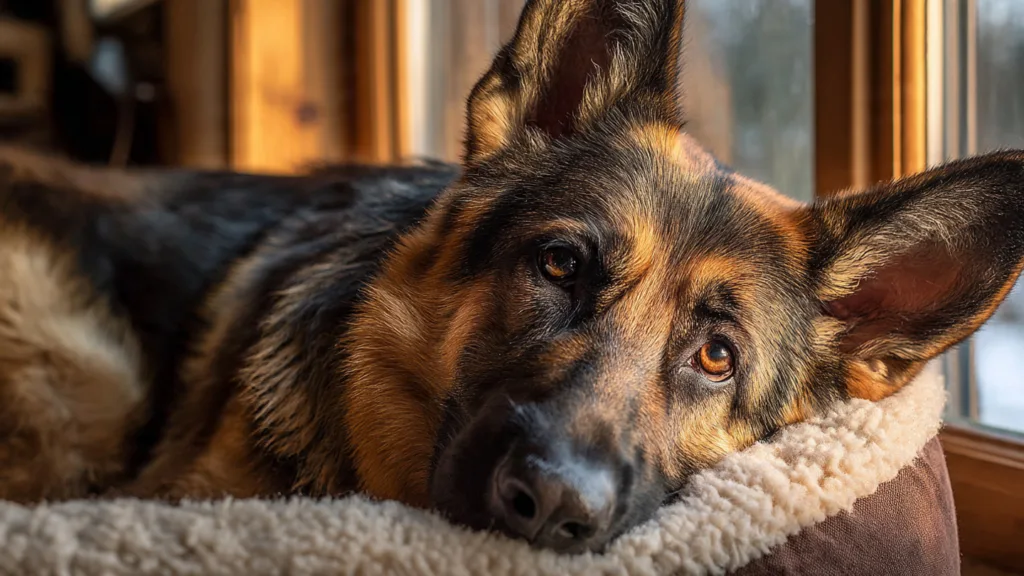
- Invest in Orthopedic Bedding: Ditch the thin mat. A thick, orthopedic, memory foam bed provides crucial support for their entire body, taking pressure off those major joints like hips and shoulders. Place it in a warm, draft-free spot.
- Battle the Slippery Floors: Hardwood and tile floors are an ice rink for a dog with shaky joints. Use runner rugs, yoga mats, or non-slip carpet tiles to create secure pathways through your home. This gives them the confidence to walk without their legs splaying.
- Ramp It Up: If your GSD sleeps on your bed or likes to get on the couch, a pet ramp or a set of sturdy pet stairs is a game-changer. It prevents the painful impact of jumping down, which is a major stressor on the elbows and shoulders.
Step 2: Adapt Your Exercise Routine
Activity is still essential—it’s just about being smarter about it.
- Warm-Ups are Non-Negotiable: Never go from a cold start to a full-paced walk. Start with a few minutes of gentle walking before you even leave your yard or street. A proper warm-up gets the blood flowing and prepares the joints for movement.
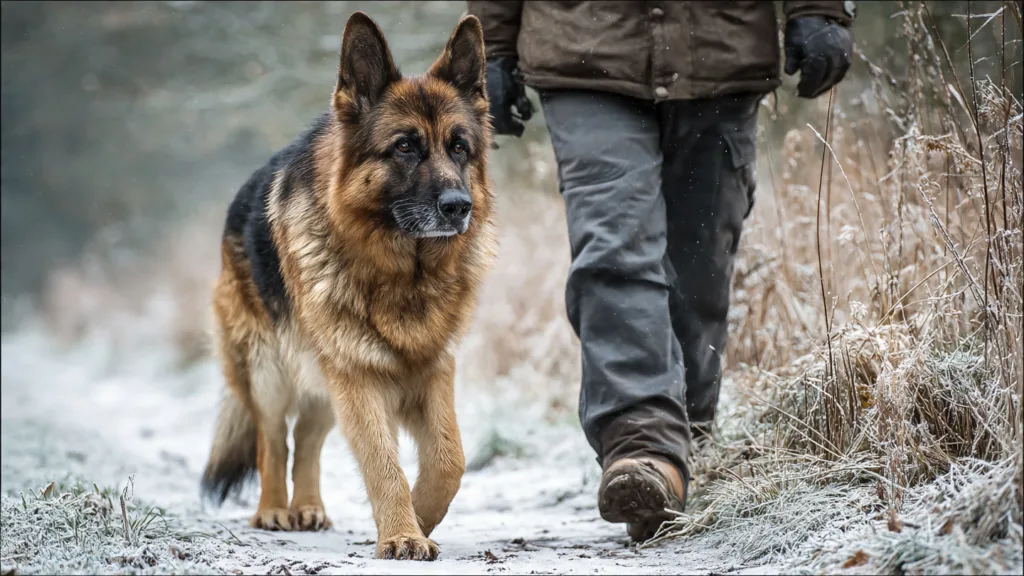
- Shorter, More Frequent Walks: Instead of one long, exhausting walk, try two or three shorter ones. This keeps the joints mobile without overdoing it. A 15-minute walk in the late morning and another in the afternoon is perfect.
- Embrace Indoor Brain Games: On days when it’s just too nasty outside, keep their mind and body engaged indoors. Hide-and-seek with treats, a snuffle mat, or practicing basic obedience commands are great low-impact activities.
Step 3: Nutrition and Supplementation
You can’t out-exercise a bad diet. What your dog eats plays a massive role in joint health.
- Maintain a Healthy Weight: This is the single most important thing you can do. Every extra pound is several pounds of extra pressure on their joints. In winter, it’s easy for them to gain weight, so be mindful of treat intake and adjust their food if their activity level drops significantly.
- Consider a Joint Supplement: A quality joint supplement can provide the building blocks for healthy cartilage and joint fluid. Look for these key ingredients:
| Ingredient | What It Does |
|---|---|
| Glucosamine & Chondroitin | Helps repair cartilage and slow its breakdown. |
| MSM (Methylsulfonylmethane) | A natural anti-inflammatory that helps reduce pain. |
| Omega-3 Fatty Acids (from Fish Oil) | Powerful anti-inflammatories for the whole body. |
Always talk to your vet before starting any new supplement to get the right product and dosage for your dog.
• Sudden, severe lameness or inability to bear weight on a leg.
• Crying or whining when moving or being touched.
• A noticeable, large swelling around a joint.
• A significant decrease in appetite or energy levels alongside the stiffness.
• The stiffness doesn’t improve with a few minutes of gentle movement.
Final Tips for a Pawsitive Winter
A little extra TLC goes a long way. After a walk, gently towel-dry your GSD, paying special attention to their paws and legs to get rid of any ice or salt. Speaking of salt, use pet-safe ice melt on your own property and wipe their paws after walks to prevent irritation from harsh chemicals. And finally, don’t underestimate the power of a gentle massage. Using slow, circular motions on their thighs, shoulders, and back can work wonders for circulation and relaxation.
Wrapping Up
Caring for a German Shepherd with joint issues in winter can feel daunting, but it’s truly about consistent, loving management. By creating a warm and safe home, adapting your exercise, and supporting their body from the inside out, you’re not just managing their pain—you’re actively improving their quality of life. Seeing that spring back in their step, even on the coldest day, is worth every bit of effort.
I’d love to hear from you—what’s one small change you’ve made this winter that your German Shepherd has really appreciated?