
🐾 Introduction
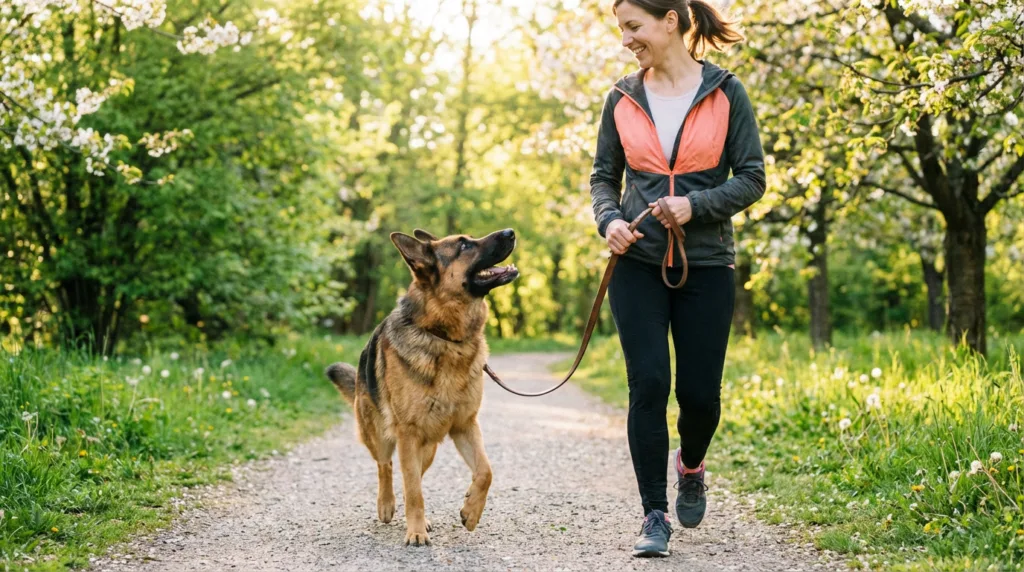
Spring is finally here. Longer days, warmer weather, and more outdoor time with your German Shepherd, it sounds perfect.
But here’s the reality most owners underestimate:
👉 Spring is one of the most dangerous seasons for your dog.
From hidden parasites to sudden weather changes and toxic plants, your German Shepherd faces a completely new set of risks after winter.
In this guide, you’ll discover the biggest spring dangers, how to spot early warning signs, and what you should do to keep your dog safe.
⚠️ Why Spring Is Risky for German Shepherds
After months of cold weather, your dog’s routine changes quickly:
- More walks
- More exposure to nature
- More contact with other animals
At the same time:
- Parasites become active
- Allergens increase
- Moisture creates skin problems
👉 This combination makes spring a high-risk transition period.
🐜 1. Parasites Are Back (Ticks, Fleas, and More)
As temperatures rise, parasites come back fast, and aggressively.
The biggest threats:
- Ticks
- Fleas
- Mosquitoes
These can cause:
- Skin irritation
- Infections
- Serious diseases
👉 German Shepherds are especially vulnerable because their thick coat hides parasites easily.
🌼 2. Spring Allergies (A Hidden but Common Problem)
Many German Shepherds suffer from seasonal allergies—but owners often miss the signs.
Common triggers:
- Pollen
- Grass
- Dust
Warning signs:
- Excessive scratching
- Red skin
- Ear infections
- Paw licking
👉 If your dog suddenly becomes itchy, allergies are a likely cause.
🌧️ 3. Wet Weather and Skin Infections
Spring often means:
- Rain
- Mud
- Damp fur
This creates the perfect environment for:
- Bacteria
- Fungi
Possible issues:
- Hot spots
- Skin infections
- Bad odors
👉 Moisture trapped in a German Shepherd’s coat can quickly turn into a problem.
🌡️ 4. Unstable Temperatures
Spring weather can change drastically within hours.
Warm afternoons… cold mornings… sudden rain.
👉 This can lead to:
- Discomfort
- Stress
- Increased risk of illness
German Shepherds are resilient, but sudden changes still affect their body.
🌿 5. Toxic Plants and Outdoor Hazards
Spring brings new plant growth, but not all plants are safe.
Common dangers:
- Toxic flowers
- Fertilizers
- Garden chemicals
👉 Even a simple walk can expose your dog to harmful substances.
🐕 6. Increased Activity = Increased Injury Risk
After a slower winter, your dog suddenly becomes more active.
Running, jumping, playing…
👉 But their body may not be fully ready.
Common risks:
- Joint strain
- Muscle injuries
- Paw damage
This is especially important for German Shepherds, who are prone to joint issues.
🚨 7 Signs Your German Shepherd Is Struggling This Spring
Watch closely for these symptoms:
- Constant scratching
- Low energy
- Limping
- Red or irritated skin
- Loss of appetite
- Unusual behavior
👉 These are early warning signs that something is wrong.
🛡️ How to Keep Your German Shepherd Safe in Spring
1. Check Your Dog After Every Walk
Look for:
- Ticks
- Cuts
- Irritation
👉 Prevention starts with awareness.
2. Keep a Consistent Grooming Routine
Brushing helps:
- Remove allergens
- Detect parasites
- Keep skin healthy
3. Dry Your Dog Properly
After rain or wet walks:
- Towel dry thoroughly
- Focus on undercoat
👉 Moisture is your enemy.
4. Use Preventative Treatments
Protect against:
- Fleas
- Ticks
- Parasites
👉 Vet-approved solutions are best.
5. Adapt Exercise Gradually
Don’t go from low activity to intense exercise overnight.
👉 Increase activity step by step.
🧩 Final Thoughts
Spring is a beautiful season, but for your German Shepherd, it comes with real risks.
The good news?
👉 Most of these dangers are easy to prevent if you know what to look for.
By staying alert, maintaining a routine, and acting early, you can make sure your dog enjoys spring safely and comfortably.
🔎 FAQ
Is spring dangerous for German Shepherds?
Yes, due to parasites, allergies, and environmental changes.
How do I protect my dog in spring?
Regular checks, grooming, parasite prevention, and avoiding risky areas.
Why is my German Shepherd itching more in spring?
👉 Most likely due to seasonal allergies or parasites.