🐾 Introduction
Spring is the perfect season for long walks with your German Shepherd.
The weather is better, nature is alive again, and your dog has more energy than ever.
But here’s something most owners don’t realize:
👉 Spring walks come with hidden dangers.
What looks like a safe and enjoyable outing can quickly turn into a health risk if you’re not careful.
In this guide, you’ll discover the most common outdoor hazards in spring, and how to keep your German Shepherd safe on every walk.
⚠️ Why Spring Walks Can Be Risky
After winter, everything changes:
- New plant growth
- Increased parasite activity
- Wetter, unstable terrain
👉 Your dog is suddenly exposed to risks that weren’t present just weeks ago.
And because German Shepherds are active and curious, they’re more likely to explore, and get into trouble.
🌿 1. Toxic Plants and Flowers
Spring brings beautiful plants, but some are dangerous for dogs.
Common toxic plants:
- Daffodils
- Tulips
- Lily of the valley
👉 Even small amounts can cause:
- Vomiting
- Lethargy
- Digestive issues
What to do:
- Prevent your dog from chewing plants
- Stay alert in parks and gardens
🐜 2. Parasites in Grass and Bushes
Spring is peak season for:
- Ticks
- Fleas
👉 These parasites hide in:
- Tall grass
- Bushes
- Forest edges
Your dog can pick them up in seconds.
Prevention:
- Avoid overgrown areas
- Check your dog after every walk
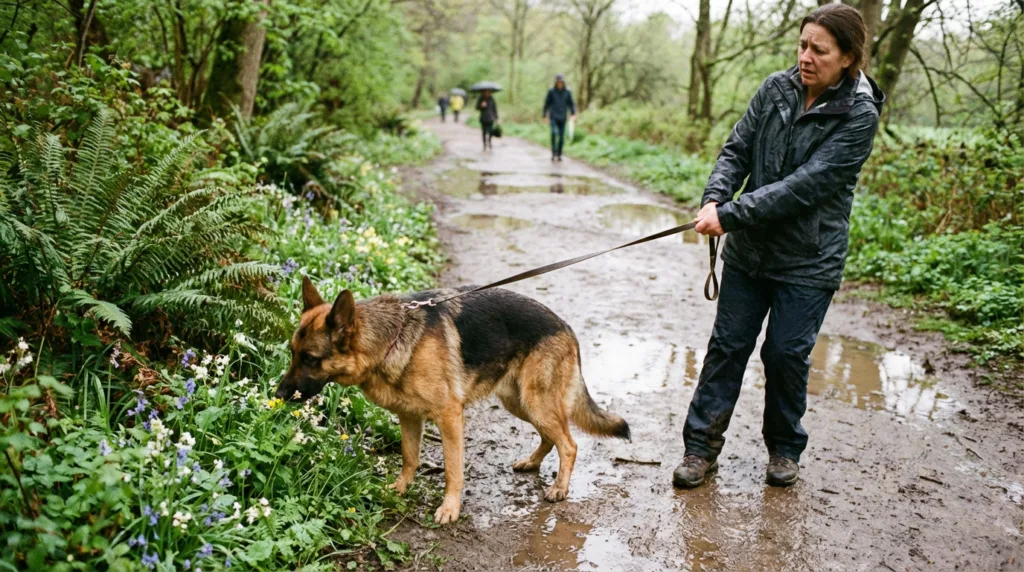
🌧️ 3. Mud and Wet Conditions
Spring often means wet ground and muddy paths.
👉 This may seem harmless, but it can lead to:
- Slipping injuries
- Paw irritation
- Skin infections
Moisture trapped in your German Shepherd’s coat can also cause:
- Bacterial growth
- Hot spots
🧪 4. Chemicals and Fertilizers
Spring is also when people treat lawns and gardens.
👉 Hidden dangers include:
- Fertilizers
- Pesticides
- Weed killers
These substances can be:
- Toxic if ingested
- Irritating to paws and skin
Tip:
Avoid treated areas and rinse paws after walks.
🐕 5. Overexertion After Winter
Your dog may suddenly become more active in spring.
Running, jumping, playing longer…
👉 But their body may not be ready yet.
Risks:
- Muscle strain
- Joint injuries
- Fatigue
German Shepherds are especially prone to joint issues, so gradual activity is key.
🐾 6. Paw Injuries from New Terrain
Spring terrain can be unpredictable:
- Sharp debris
- Wet rocks
- Uneven paths
👉 This can cause:
- Cuts
- Cracks
- Limping
What to check:
- Between toes
- Paw pads
- Nails
🌬️ 7. Allergens in the Air
Spring air is full of:
- Pollen
- Dust
👉 These can trigger:
- Itching
- Sneezing
- Skin irritation
Your dog may react even if they never had allergies before.
🚨 Warning Signs After a Walk
Always monitor your dog after outdoor activity.
Watch for:
- Excessive scratching
- Limping
- Lethargy
- Paw licking
- Red skin
👉 These signs often appear quickly after exposure to a problem.
🛡️ How to Keep Your German Shepherd Safe on Spring Walks
1. Choose Safer Walking Areas
- Avoid tall grass
- Stay on clear paths
- Be cautious in unfamiliar areas
2. Do a Post-Walk Check
Inspect:
- Coat
- Paws
- Ears
👉 This simple habit prevents many problems.
3. Clean Your Dog After Walks
- Wipe paws
- Rinse if necessary
👉 Removes allergens and chemicals.
4. Keep Walks Gradual
Increase duration and intensity slowly.
5. Stay Observant During Walks
Watch what your dog:
- Sniffs
- Eats
- Walks through
👉 Prevention starts during the walk, not after.
❗ Common Mistakes to Avoid
- Letting dogs roam in tall grass
- Ignoring muddy or wet conditions
- Not checking paws
- Underestimating chemicals
- Assuming all parks are safe
👉 Small oversights can lead to bigger issues.
🧩 Final Thoughts
Spring walks should be enjoyable, not risky.
👉 The good news? Most dangers are easy to avoid if you’re aware of them.
By staying alert, choosing safe environments, and checking your dog regularly, you can enjoy every walk with confidence.
🔎 FAQ
Are spring walks dangerous for dogs?
They can be, due to parasites, toxic plants, and environmental hazards.
How do I protect my German Shepherd during walks?
Avoid risky areas, check your dog after walks, and clean paws regularly.
Why is my German Shepherd limping after a walk?
👉 It could be due to injury, rough terrain, or overexertion.