🐾 Introduction
Winter is over, and spring is finally here. Longer walks, warmer days, and more outdoor time, your German Shepherd is probably excited.
But here’s something many owners overlook:
👉 The transition from cold to warm weather can be stressful for your dog’s body.
Changes in temperature, activity levels, and environment can impact your German Shepherd’s health more than you think.
In this guide, you’ll learn how to safely transition your dog into spring, avoid common mistakes, and keep them healthy during this seasonal shift.
⚠️ Why Seasonal Transitions Matter for Dogs
Dogs don’t instantly adapt to seasonal changes.
After winter, your German Shepherd’s body has adjusted to:
- Colder temperatures
- Lower activity levels
- A thicker coat
👉 When spring arrives, everything changes quickly:
- Warmer weather
- Increased activity
- Exposure to allergens and parasites
This sudden shift can lead to:
- Fatigue
- Skin issues
- Increased stress on joints
🌡️ 1. Help Your Dog Adapt to Temperature Changes
Spring weather is unpredictable, cold mornings, warm afternoons, and sudden rain.
👉 This can confuse your dog’s natural regulation system.
What you should do:
- Avoid long walks during extreme temperature swings
- Keep a consistent routine
- Monitor your dog for signs of discomfort
Warning signs:
- Shivering (still too cold)
- Panting (too warm)
- Low energy
👉 Gradual exposure is key.
🐕 2. Adjust Exercise Levels Gradually
After a slower winter, your dog may not be ready for intense activity.
👉 Jumping straight into long runs or hikes can cause:
- Muscle strain
- Joint stress
- Fatigue
Smart approach:
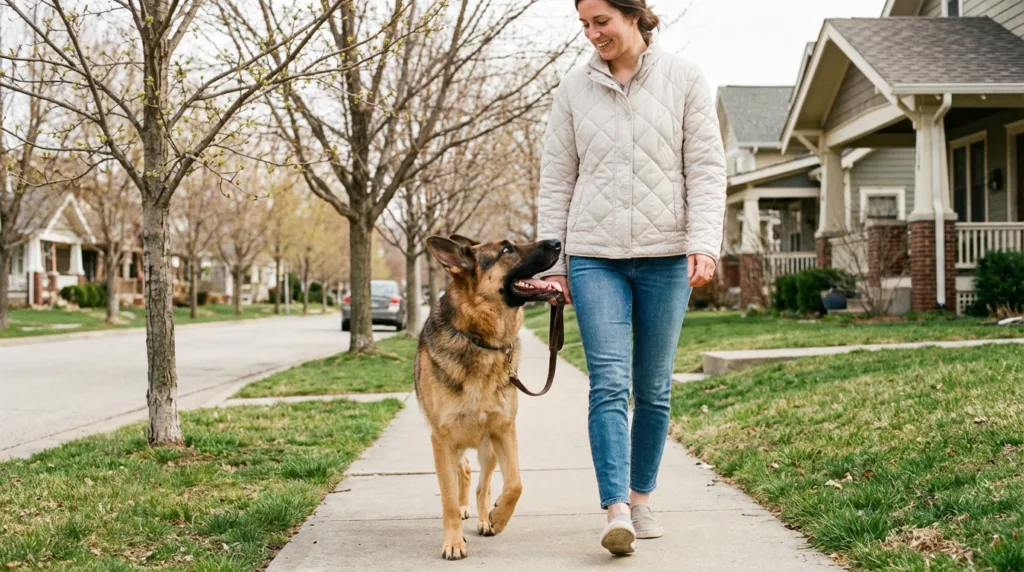
- Start with shorter walks
- Increase intensity over 1 – 2 weeks
- Observe how your dog reacts
German Shepherds are active, but they still need time to readjust.
🧠 3. Support Joint and Muscle Health
Winter inactivity can affect your dog’s mobility.
👉 Spring is when joint issues may start to appear.
Watch for:
- Stiffness
- Limping
- Slower movement
What helps:
- Gentle exercise
- Proper warm-up (yes, even for dogs)
- Balanced nutrition
👉 Prevention is easier than recovery.
🌿 4. Prepare for Allergies and Environmental Changes
Spring introduces new elements into your dog’s environment:
- Pollen
- Grass
- Dust
👉 These can trigger allergic reactions.
Early prevention tips:
- Rinse paws after walks
- Brush regularly
- Keep sleeping areas clean
If your dog starts itching, act quickly, don’t wait.
🐜 5. Restart Parasite Protection
Many owners stop treatments during winter.
👉 Spring is when parasites come back:
- Fleas
- Ticks
- Mosquitoes
What to do:
- Resume preventative treatments
- Check your dog after walks
- Stay consistent
👉 This is one of the most important steps.
🧼 6. Adapt Your Grooming Routine
Your German Shepherd is likely entering shedding season.
👉 This requires more grooming than winter.
Key changes:
- Brush more frequently
- Remove undercoat buildup
- Keep skin dry and clean
👉 Proper grooming helps prevent:
- Skin infections
- Matting
- Excess shedding in your home
🏡 7. Adjust Your Dog’s Daily Routine
Spring often changes your schedule, and your dog’s too.
More outdoor time, different walk hours, new environments…
👉 Dogs thrive on routine.
Keep things stable:
- Feed at the same time
- Walk consistently
- Maintain sleep patterns
👉 Stability reduces stress during seasonal changes.
🚨 Common Mistakes to Avoid
Many issues during spring come from simple mistakes:
- Increasing activity too quickly
- Ignoring early allergy signs
- Forgetting parasite prevention
- Skipping grooming
- Assuming dogs adapt instantly
👉 Small mistakes can lead to bigger problems.
🧩 Final Thoughts
The transition from winter to spring is a critical period for your German Shepherd.
👉 It’s not just about enjoying better weather—it’s about helping your dog adapt safely.
By taking a gradual, proactive approach, you can:
- Prevent health issues
- Improve comfort
- Set your dog up for a healthy, active season
🔎 FAQ
How do I transition my dog from winter to spring?
Gradually increase activity, adapt grooming, and restart parasite prevention.
Can weather changes affect dogs?
Yes, sudden temperature shifts can impact energy, joints, and overall health.
Why is my dog more tired in spring?
👉 It may be adjusting to increased activity or environmental changes.