German Shepherd / Winter Care / Dog Safety
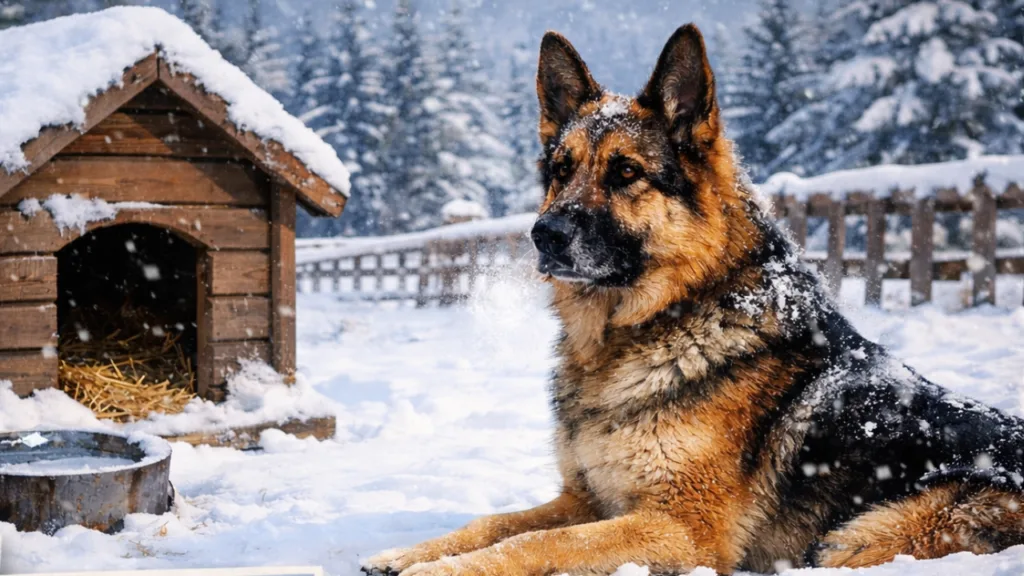
The image of a powerful German Shepherd standing guard in a snowy yard is iconic. It reflects the breed’s heritage as a strong, intelligent working dog built for demanding conditions. But this image also leads many owners to ask an important – and potentially dangerous – question:
- The short answer:
- Factors That Increase Cold Risk
- ❄️ Hypothermia
- 🧊 Frostbite
- 💧 Dehydration
- 🐾 Paw Injuries
- 🧠 Stress & Isolation
- 🚫 Absolute Rule
- 🌡 Temperature Matters
- 🏠 Proper Winter Shelter Is Essential
- 🍽 Nutrition Considerations
- Can a German Shepherd sleep outside in an insulated doghouse?
- What about sled dogs or farm dogs?
- Do German Shepherds enjoy snow?
Can German Shepherds stay outside in winter?
The short answer:
While German Shepherds tolerate cold better than many breeds, leaving them outside unsupervised in winter – especially overnight – poses serious and often preventable risks to their health and well-being.
Their famous double coat offers impressive insulation, but it is not invincible. Knowing the difference between enjoying winter weather and being exposed to real danger is a key part of responsible German Shepherd ownership.
This guide cuts through common myths and explains the real risks, the limits of cold tolerance, and how to keep your German Shepherd safe during winter.
Cold-Tolerant vs. Cold-Proof: A Crucial Distinction
Yes, German Shepherds are cold-tolerant. Their dense undercoat and guard hairs help them retain body heat in chilly conditions. However, tolerant does not mean immune.
Modern German Shepherds are primarily companion animals, not outdoor livestock guardians. Several factors reduce their ability to safely remain outdoors in winter:
Factors That Increase Cold Risk
- Indoor Lifestyle
Most GSDs live in climate-controlled homes and lack full seasonal acclimatization. - Age & Health
Puppies, senior dogs, and dogs with arthritis, hip dysplasia, or illness lose heat much faster. - Weather Variables
Wind chill, freezing rain, snow accumulation, and sudden temperature drops can overwhelm even a thick coat. - Lack of Control
A dog left outside cannot seek warmth, dry off, or escape worsening conditions.
The Real Dangers of Leaving a German Shepherd Outside in Winter
Outdoor time becomes dangerous when it turns from choice to confinement. The main winter risks include:
❄️ Hypothermia
Hypothermia occurs when a dog loses body heat faster than it can generate it-especially if the coat becomes wet.
Early signs:
- Shivering
- Anxiety or restlessness
Advanced signs:
- Lethargy
- Stiff muscles
- Weakness or collapse
🧊 Frostbite
Though less common, frostbite can cause severe tissue damage, most often affecting:
- Ear tips
- Tail
- Paws
Affected skin may appear pale, gray, or bluish and feel cold or brittle.
💧 Dehydration
Water bowls freeze quickly in winter. Eating snow is not a substitute for drinking water and actually consumes body heat.
🐾 Paw Injuries
- Ice cuts
- Cracked pads
- Chemical burns from salt and de-icers
Repeated licking can also cause toxic ingestion.
🧠 Stress & Isolation
German Shepherds are deeply bonded, social dogs. Long periods of isolation outdoors-especially in harsh conditions-can lead to:
- Anxiety
- Frustration
- Excessive barking
- Destructive behavior
Safe Winter Outdoor Time: What’s Acceptable?
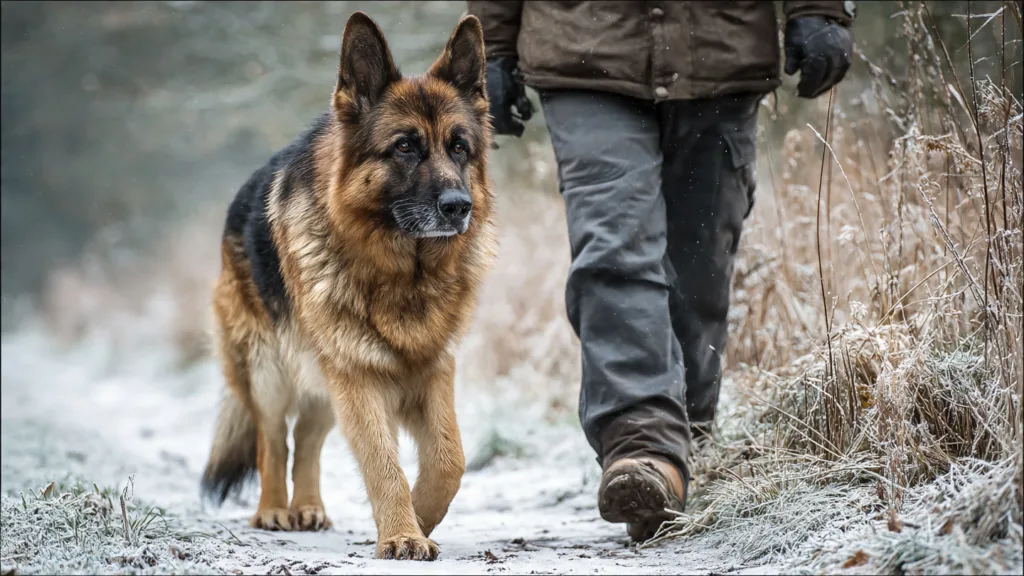
Your German Shepherd will still need exercise, play, and bathroom breaks in winter. The key is control and supervision.
🚫 Absolute Rule
No dog should be left outside overnight in winter.
Temperatures drop, wind shifts, and emergencies can happen when you’re asleep.
Guidelines for Limited Daytime Outdoor Exposure
🌡 Temperature Matters
- Above 32°F (0°C): Short supervised outdoor time is usually safe.
- Below 20°F (-7°C): Outdoor time should be brief and closely monitored.
- Extreme wind chill drastically increases danger.
🏠 Proper Winter Shelter Is Essential
If your GSD must spend time outdoors during the day, a basic doghouse is not enough.
A winter-ready dog shelter must be:
- Fully insulated (walls, floor, roof)
- Weatherproof and dry
- Snug-sized (not oversized)
- Raised off the ground
- Filled with dry straw or cedar shavings
- Equipped with unfrozen water (heated bowl recommended)
⚠️ Heated lamps and electric beds are not substitutes and can be fire hazards.
🍽 Nutrition Considerations
Dogs burning more energy to stay warm may need additional calories – consult your veterinarian before adjusting food intake.
Signs Your German Shepherd Is Too Cold (Bring Them Inside Immediately)
Your dog will tell you when it’s too cold. Watch for:
- Persistent or violent shivering
- Whining, barking, or anxious pacing
- Lifting paws repeatedly
- Stiff movement or slowing down
- Curling tightly into a ball
- Seeking shelter or attempting to burrow
Why Indoors Is Always the Safer Choice
Keeping your German Shepherd indoors during winter:
- Eliminates hypothermia and frostbite risks
- Allows you to monitor health and comfort
- Strengthens your bond
- Supports their emotional well-being
Supervised outdoor play gives them the joy of snow without the danger of exposure.
Frequently Asked Questions
Can a German Shepherd sleep outside in an insulated doghouse?
Not safely. Overnight temperatures and wind can change rapidly, and distress may go unnoticed.
What about sled dogs or farm dogs?
These dogs are selectively bred for extreme climates and live in professionally managed, acclimated environments. Most family German Shepherds do not share those adaptations.
Do German Shepherds enjoy snow?
Yes-during play. Enjoyment does not equal safe long-term exposure.
Final Thoughts: Prioritize Welfare Over Assumptions
The real question isn’t “Can they?”
It’s “Should they?”
While German Shepherds are resilient, extended unsupervised winter exposure is unnecessary and risky. The safest, most compassionate choice is to keep your dog indoors, provide supervised winter activities, and ensure their comfort year-round.
A warm home, attentive care, and informed decisions are the foundation of a happy, healthy German Shepherd-no matter the season.