Accueil » 7 Essential Tips for Your Golden Retriever’s Winter Joint Care
Keeping Your Golden Retriever’s Joints Happy and Healthy This Winter ❄️
Hey there, fellow Golden lover! If you’re like me, you’ve spent countless hours watching your furry best friend bound through fields, leap for tennis balls, and give you that signature happy wiggle. Our Goldens are pure joy on four legs. But as they move into their adult years, and especially when the cold weather sets in, you might start to notice a little stiffness in that wag. Those rambunctious puppies grow into majestic adults, and with that comes a responsibility to care for their joints.
I’ve had Goldens my whole life, and I can tell you, winter is a game-changer. The cold air, the dry heat indoors, and the temptation to skip long walks can really take a toll on their mobility. But don’t worry! With a little know-how, we can help our loyal companions stay agile, comfortable, and ready for springtime adventures. Let’s dive into my top tips for supporting your Golden Retriever’s joints during the chilly months.
7 Essential Tips for Your Golden’s Winter Joint Care
1. Manage Their Weight Like a Pro 🏋️♂️
This is, hands down, the single most important thing you can do for your Golden’s joints. Every extra pound on their frame is like adding five pounds of pressure on their hips and knees. In winter, when activity naturally dips, it’s super easy for those pounds to sneak on.
Winter Watch: Those shorter walks and more indoor time mean your dog is burning fewer calories. It’s crucial to adjust their food portions accordingly. A little less kibble can make a world of difference.
How to tell if your Golden is at a healthy weight?
- You should be able to easily feel their ribs with a light touch, without a thick layer of fat.
- They should have a visible “tuck-up” or waist when viewed from above.
If you’re unsure, your vet can give you the best guidance. A lean Golden is a mobile, happy Golden!
2. Keep Them Moving with Low-Impact Exercise 🚶♀️
It might be tempting to let them become a couch potato when it’s freezing outside, but consistent, gentle movement is key for joint health. It keeps the muscles around the joints strong and the synovial fluid (the joint’s natural lubricant) flowing.
Great winter activities include:
- Brisk, shorter walks: Better to do two 15-minute walks than one long, strenuous one.
- Indoor play: Gentle games of hide-and-seek or short sessions of fetch in a long hallway.
- Swimming: If you have access to an indoor canine hydrotherapy pool, this is absolute gold for joints!
Pro Tip: Always warm them up before activity. A few minutes of gentle walking or easy play before a more brisk pace can prevent stiffness.
3. Create a Cozy, Supportive Sleep Sanctuary 🛏️
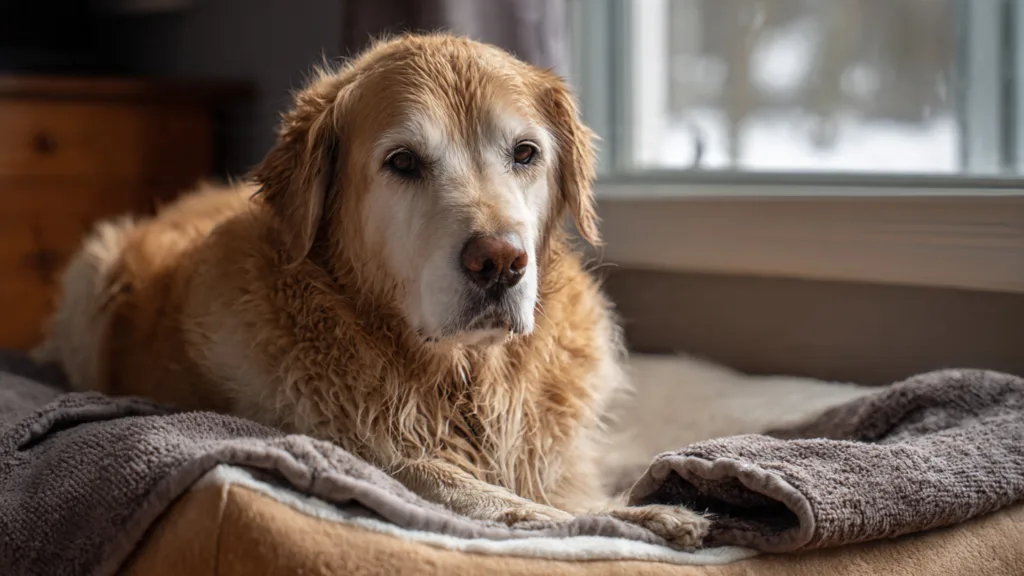
Think about how your back feels after sleeping on a bad mattress. It’s the same for our dogs! A supportive bed is not a luxury; it’s a necessity for a large breed like a Golden Retriever.
Drafty floors are a big no-no in winter. A cold, hard floor can make any joint ache worse.
- Orthopedic Beds: These are fantastic. They’re made with high-density, memory foam that cushions pressure points and supports the entire body.
- Location: Place their bed in a warm, draft-free spot away from vents blowing dry heat directly on them.
4. Invest in Joint-Supporting Supplements 💊
Even with the best diet, a little extra support can go a long way. I’ve seen remarkable differences in my own dogs after starting them on supplements. The key is to look for ones with these proven ingredients:
| Ingredient | What It Does |
|---|
| Glucosamine & Chondroitin | Building blocks for cartilage repair and maintenance. |
| Omega-3 Fatty Acids (from Fish Oil) | Powerful anti-inflammatories that help reduce joint swelling and pain. |
| MSM (Methylsulfonylmethane) | Helps with inflammation and may improve flexibility. |
Always chat with your vet before starting any new supplement to get the right type and dosage for your dog.
5. Make Your Home a Slip-Free Zone 🏠
Slippery hardwood, tile, and laminate floors are a major hazard for dogs with joint issues. A slipping dog can easily strain or injure themselves. In winter, with potentially wet paws coming inside, it’s an even bigger risk.
- Use Rugs and Runners: Create “runways” of traction in high-traffic areas. Make sure they have a non-slip backing!
- Trim Paw Fur: The long hair between their paw pads can trap ice and reduce grip. Keeping it trimmed helps.
- Non-Slip Socks or Booties: These can provide excellent traction and also protect from icy sidewalks and salt.
6. Warm Them Up, Inside and Out 🔥
Cold temperatures can make joints feel stiffer and more painful. Keeping your Golden warm is a simple but effective comfort measure.
Winter Watch: The dry heat from your furnace can dehydrate your dog and may dry out their skin and joint tissues. Make sure they always have access to fresh water, and consider a humidifier.
- Doggy Jackets: For walks in the cold, a well-fitting waterproof jacket can help keep their core and muscles warm.
- Warm Bedding: A warm blanket in their orthopedic bed adds an extra layer of cozy comfort.
- Gentle Massage: After a walk, spend a few minutes gently rubbing their shoulders, hips, and back legs. It increases blood flow and can relieve tension.
7. Be a Master of Paw and Coat Care 🐾
This might seem unrelated, but trust me, it’s not. A dog that’s uncomfortable from cracked paws or cold skin is a dog that won’t want to move, leading to more stiffness.
- Paw Protection: Ice-melting chemicals and salt are brutal on paw pads. Wipe their paws with a warm, damp cloth after every walk to remove any residue. You can also use a protective paw balm.
- Keep Them Dry: If they get wet on a walk, dry them off thoroughly with a towel when you get home, paying special attention to their feet and legs.
- Regular Brushing: A well-brushed coat provides better insulation against the cold.
Bonus Tip: Ramp It Up! 📈
If your Golden loves to snuggle with you on the couch or sleep in your bed, consider getting a pet ramp or stairs. Jumping up and down from furniture is a high-impact activity that jars their joints. A ramp is a simple investment that can save them from a world of hurt, especially first thing in the morning when they’re at their stiffest.
When to Ring the Vet 🩺
You know your dog better than anyone. While some stiffness is common, be on the lookout for signs that something more serious is going on. Please call your vet if you notice:
- Consistent limping or favoring one leg.
- Significant difficulty standing up or lying down.
- Whining, yelping, or flinching when touched in a specific area.
- A sudden reluctance to go on walks, climb stairs, or jump.
- Swelling around a joint.
- Any major change in their personality or activity level.
Early intervention is always best when it comes to joint health.
Caring for your Golden Retriever’s joints is one of the most loving things you can do. It’s about making small, consistent choices that add up to a lifetime of happy wags and adventurous spirit. This winter, let’s promise to be a little more mindful for them.
What’s the one joint-care trick that has made the biggest difference for your furry friend? I’m always looking for new ideas to share with our community!