Winter is Coming: Your Rottweiler’s Quick Guide to Beating the Cold
Hey there, fellow Rottie lover. If you’re like me, you’ve spent years with that loyal, confident head resting on your knee. We know our Rottweilers are tough, with that classic double coat that seems built for anything. But here’s the thing I’ve learned through many winters: that tough exterior can be a bit deceiving when the temperature plummets. Winter brings a unique set of challenges—from icy walks to dry, heated air indoors—that our beloved guardians aren’t always equipped to handle alone, especially the young pups. This isn’t about coddling; it’s about smart, experienced ownership. So, grab a coffee, and let’s walk through how to keep your best friend safe, warm, and thriving all season long.
Your Action Plan: 5 Key Areas to Focus On
Think of winter care as a puzzle with a few crucial pieces. Nail these, and you’ll both enjoy the frosty months worry-free.
1. Decode Your Rottie’s “I’m Cold” Signals 🥶
Rottweilers are stoic. They won’t always shiver like a Chihuahua. You need to become a detective. Watch for subtle signs: whining or hesitation to go outside, lifting paws off the cold ground one after the other, or seeking shelter behind you on a walk. An adult Rottie might just slow down and seem lethargic. A Rottweiler puppy is especially vulnerable—they have less body fat and a less developed coat. If they’re trembling, curling tightly into a ball, or seem anxious in the cold, that’s your cue to head inside immediately.
2. Master the Art of the Winter Walk
Walks are non-negotiable, but winter walks need strategy. Shorten the duration but keep the frequency. Three 15-minute walks are better than one long, chilly one. Timing is everything—aim for the warmest part of the day, like late morning or early afternoon. Always wipe down paws, legs, and belly after every walk. This removes ice-melting salts (which are toxic if licked) and prevents painful ice balls from forming between their pads. For persistent ice or salt, consider a set of durable dog boots or a reliable paw wax.
3. Rethink the “Indoor” Environment
We crank the heat to stay warm, but that dry, recycled air is a menace to your dog’s skin and coat. You might notice more dandruff or a dull, brittle coat. Combat this with a few simple steps:
- Use a humidifier near their favorite sleeping spot.
- Brush them more frequently with a good undercoat rake to stimulate natural oils.
- Ensure their bed is in a draft-free zone, away from cold floors or direct blasts from heating vents. A raised, orthopedic bed is a fantastic investment.
4. Adjust Food & Water (Yes, Really!)
This one surprises many owners. If your Rottie’s outdoor activity significantly drops, they may need slightly less food to avoid winter weight gain. However, if they remain active outdoors (like hiking in the snow), they might actually need more calories to generate body heat. Monitor their weight closely! For water, always ensure it’s fresh and unfrozen. Metal bowls left in garages or on porches can freeze quickly. Using a ceramic or plastic bowl indoors and checking outdoor water frequently is key.
5. Keep That Big Brain Busy (The Boredom Buster)
Less outdoor time can lead to a bored Rottweiler, and a bored Rottie is a destructive Rottie. Mental stimulation is your best friend. Food puzzle toys, 10-minute training sessions on new tricks, or hiding treats in a snuffle mat can tire them out as effectively as a run. For the Rottweiler puppy, this is critical for good behavior and development. A simple game of “find the treat” in the living room can make a world of difference on a bitterly cold day.
| Situation | Quick Action & Prevention |
|---|---|
| Coming in from a snowy walk | Thorough paw and belly wipe-down. Check for cracked pads. |
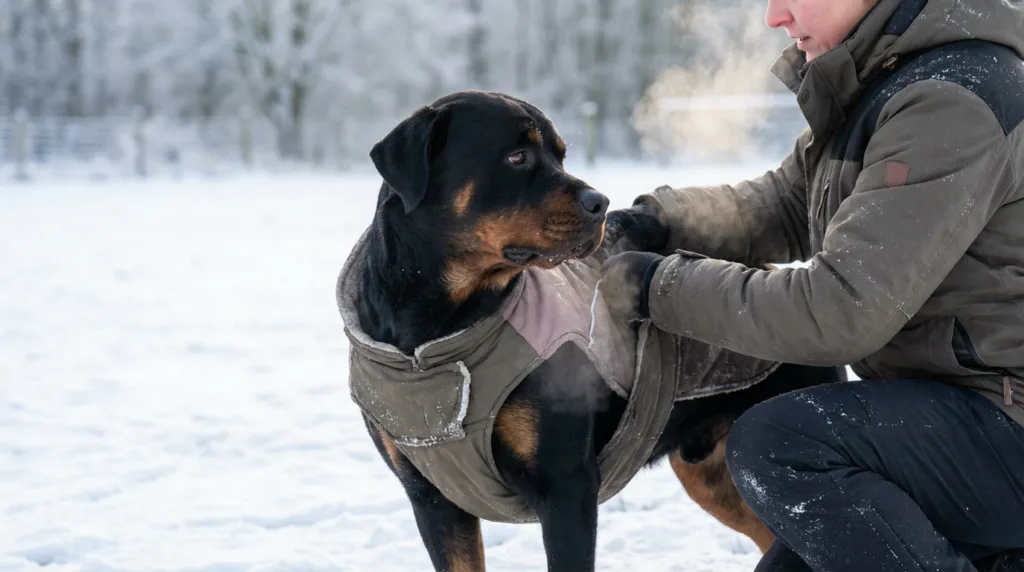
| Puppy whining at the door in cold | Limit potty breaks to 5 mins. Consider a puppy-safe sweater for quick outings. |
| Dog seems lethargic & stiff | Warm, comfortable rest area. Gentle massage. Could be arthritis flaring up in cold. |
When to Drop Everything and Call the Vet
Trust your gut. You know your dog better than anyone. While the above tips handle most situations, these are red flags:
- Persistent shivering or shaking that doesn’t stop once inside and dried off.
- Signs of hypothermia: weakness, lethargy, shallow breathing, muscle stiffness.
- Any suspicion they have ingested ice melt or antifreeze (lethargy, vomiting, stumbling).
- Paw pads that appear cut, bleeding, or discolored from cold or chemicals.
- A Rottweiler puppy that is unusually quiet, refuses to eat, or can’t get warm.
When in doubt, a quick call to your veterinarian is always the right move. It’s better to be safe.
Bonus Pro Tip: The Pre-Walk Paw Check & Massage 🐾
Here’s a little ritual I swear by. Before heading out into the cold, take a moment to massage a small amount of pet-safe paw balm or even a bit of coconut oil into your Rottie’s pads. This creates a protective barrier against salt and ice. While you’re doing it, check between their toes for any small cuts or debris. It’s a bonding moment that also provides crucial protection. They get used to you handling their feet, which makes post-walk clean-up easier, too!
Winter with a Rottweiler can be a beautiful time of cozy cuddles and playful romps in the snow. It just takes a little extra awareness and preparation from us, their people. You’ve got this.
What’s the one winter challenge you and your Rottie face every year that we haven’t covered here?