My Rottweiler Seems Stiff in Winter. Is This Normal?
Hey there. If you’re noticing your big buddy moving a little slower, groaning when he gets up, or seeming hesitant to jump into the car on a cold morning, you’re not alone. I’ve been there with my own Rottie, Duke. First off, take a deep breath. What you’re seeing is very common, especially in larger breeds and during the colder months. The winter chill can absolutely make existing joint discomfort more noticeable, just like it does for some of us. It doesn’t necessarily mean things are getting drastically worse overnight, but it’s a clear sign from your dog that he needs a little extra support from you right now. Think of it as your loyal friend saying, “Hey, could we take it easy today?” Let’s talk about what you can do.
Your Winter Action Plan for Healthy Joints
Winter requires a shift in strategy. It’s about managing comfort, maintaining safe activity, and being proactive. Here’s a straightforward plan you can start today.
1. Master the Indoor Environment
Your cozy home can have hidden pitfalls. Hardwood, tile, and laminate floors are like ice rinks for a heavy dog with stiff joints.
- Traction is Key: Use non-slip rugs, runners, or interlocking foam mats to create secure pathways to his favorite spots (bed, water bowl, door). This simple change prevents those scary, leg-splaying slips that can cause injury.
- The Bed Matters: Get him an orthopedic or memory foam bed. Place it away from cold drafts and heating vents (which can dry out joints). The goal is supportive, even warmth.
- Help with Height: Use a sturdy ramp or steps for the couch or bed if he’s allowed up. Jumping down is a major impact on those elbows and shoulders.
2. Adapt Exercise & Warm-Ups
Don’t stop exercise—modify it! A stiff dog needs to move to stay lubricated, but we have to be smart.
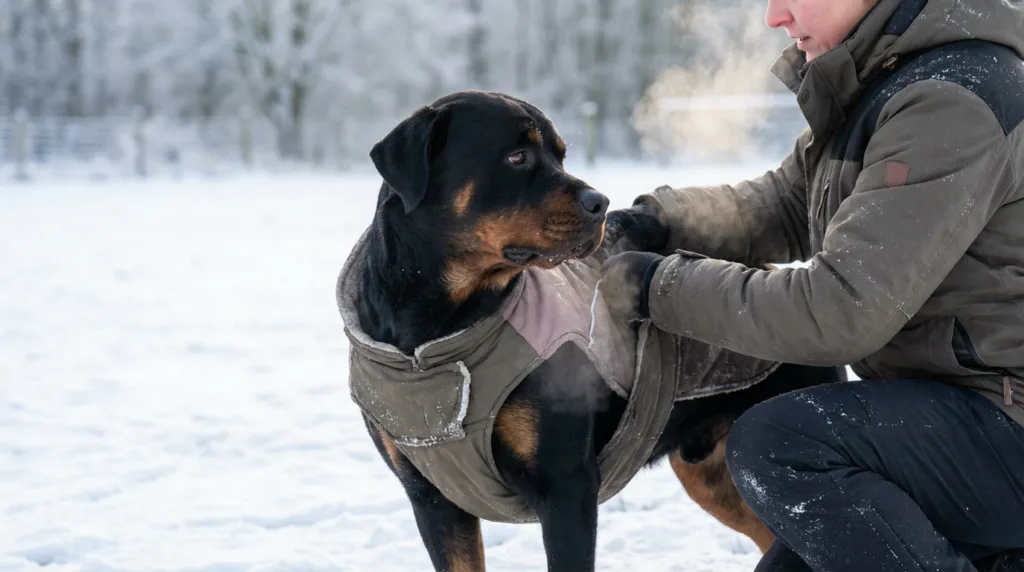
- The Essential Warm-Up: Never go from a warm house straight into a brisk walk. Spend 3-5 minutes indoors doing gentle stretches, massaging his legs, or playing a slow game of “find the treat” to get muscles warm and blood flowing.
- Shorter, More Frequent Walks: Instead of one long, cold walk, try two or three shorter ones. This keeps joints moving without overdoing it.
- Embrace Indoor Brain Games: On bitter days, replace physical exertion with mental stimulation. Food puzzles, snuffle mats, and training new tricks keep him engaged without stressing his joints.
🩹 Quick Comfort Tip: The Magic of Heat
A warm compress can work wonders for morning stiffness. Take a damp towel, microwave it for 30 seconds (TEST IT ON YOUR WRIST FIRST), and gently apply it to his hips or shoulders for 10 minutes. He’ll likely melt into it. Always supervise and ensure it’s warm, not hot.
3. Consider Supportive Supplements & Diet
Talk to your vet about adding joint-supporting nutrients. Many adult Rottweilers benefit from:
| Supplement | What It Does |
|---|---|
| Glucosamine & Chondroitin | Building blocks for cartilage repair and joint fluid. |
| Omega-3 Fatty Acids (Fish Oil) | Powerful natural anti-inflammatory. This is a game-changer for many dogs. |
| MSM | Supports connective tissue and may help reduce discomfort. |
Also, keep an eye on his weight. Every extra pound is extra pressure on his joints. Winter often means less activity, so you might need to slightly reduce his food portions.
🩺 When to Call the Vet (No Hesitation)
While home care is great, some signs mean you need professional backup. Call your vet promptly if you see:
- Sudden, severe limping or inability to bear weight on a leg.
- Whining or yelping when a joint is touched or moved.
- Swelling, redness, or unusual warmth around any joint.
- A drastic decrease in appetite or energy level paired with stiffness.
- If the stiffness doesn’t improve with gentle movement and warmth after 15-20 minutes.
It’s always better to get peace of mind. Your vet can provide pain management options, specific supplement advice, or diagnose underlying issues like hip dysplasia or arthritis.
Building Strong Joints for All Seasons
Looking beyond winter, prevention is your best long-term tool. Consistency is everything. Keep him at a lean, healthy weight year-round. Continue with low-impact exercises like swimming or gentle hiking in warmer weather. Stick with his supplement regimen even when he seems fine. Think of it as daily maintenance for a cherished companion—it pays off in years of happy, tail-wagging mobility.
I know it’s tough to see your powerful Rottweiler feeling less than 100%. But with these thoughtful adjustments, you can make this winter—and every season—much more comfortable for him. You’ve got this.
What’s the first change you’ll make for your Rottweiler’s comfort this week? Will it be laying down a new rug path or trying a warm compress? I’d love to hear what works for your big buddy.