Winter With Your Rottweiler: It’s More Than Just a Thick Coat
Hey there, fellow Rottie lover. Over the years with my big guy, Thor, I’ve learned one thing for sure: that powerful, confident Rottweiler stance can be a bit misleading when the mercury drops. We see their double coat and think, “They’re built for this!” And while they’re certainly more cold-tolerant than some breeds, winter brings a unique set of challenges for our loyal companions. It’s not just about the cold outside; it’s about the dry heat inside, the salty sidewalks, and that noticeable drop in their usual activity. Think of this guide as a chat between experienced owners—I’ll share the hard-earned, practical tips that have kept Thor happy and healthy through many snowy seasons.
My Top 5 Winter Wisdom Tips for Your Rottweiler
These aren’t just random ideas; they’re a holistic approach to winter care that covers everything from their paws to their mental well-being.
1. Respect the “Chill Threshold” – Know When to Say “Nope”
This is rule number one. Rottweilers have a limit, especially adult dogs who might be less frantic about play in the cold. A good guideline? If it’s below 20°F (-7°C), keep potty breaks short and sweet. Below 0°F (-18°C)? We’re talking bathroom business only, then straight back inside. Wind chill is a huge factor—that dense coat is great for insulation but not against a biting wind that cuts right through.
Concrete Example: Thor loves his walks, but on a 15°F day with wind, he’ll often stop, lift a paw, and look back at the house after 10 minutes. That’s my signal. He’s hit his threshold. I listen to him, every time.
2. Paw Care Isn’t Optional, It’s Essential
Ice, rock salt, and chemical de-icers are a brutal trio for paw pads. They cause cracking, chemical burns, and are toxic if licked off.
- 🛡️ Prevention: Use a pet-safe paw wax (like Musher’s Secret) before going out. It creates a protective barrier.
- 👢 Protection: For long walks on treated sidewalks or deep snow, dog boots are a game-changer. Yes, your Rottie might do the hilarious high-step at first, but they get used to it. It protects from salt AND prevents painful ice balls from forming between their toes.
- 🚿 Clean-Up: Every single time you come inside, wipe their paws and belly with a warm, damp cloth to remove all salt and chemicals.
Pro Tip: Trim the hair between their paw pads to minimize ice ball formation. It makes a huge difference!
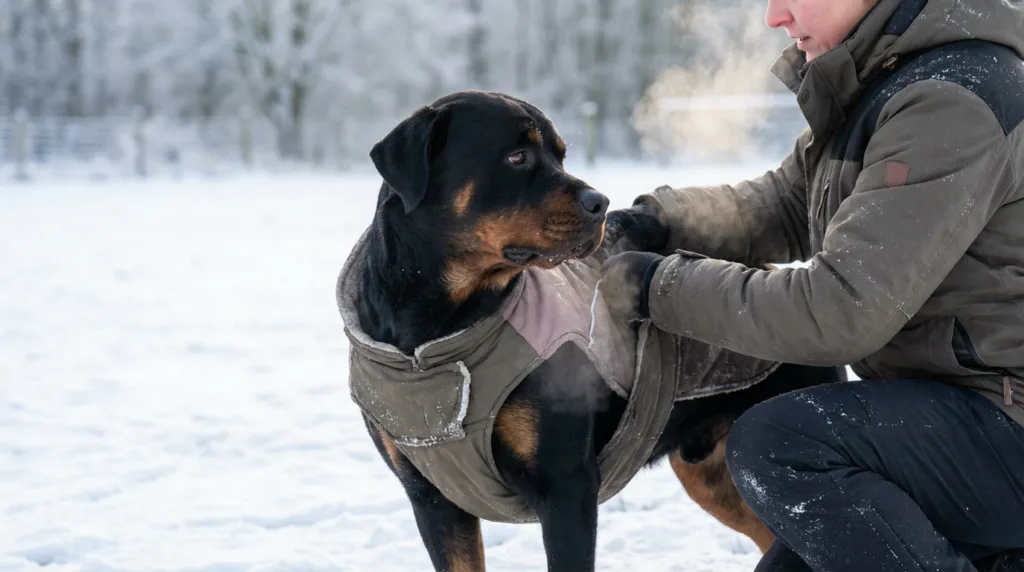
3. Layer Up Strategically (Yes, Even for a Rottie!)
Not every Rottweiler needs a coat, but consider one if:
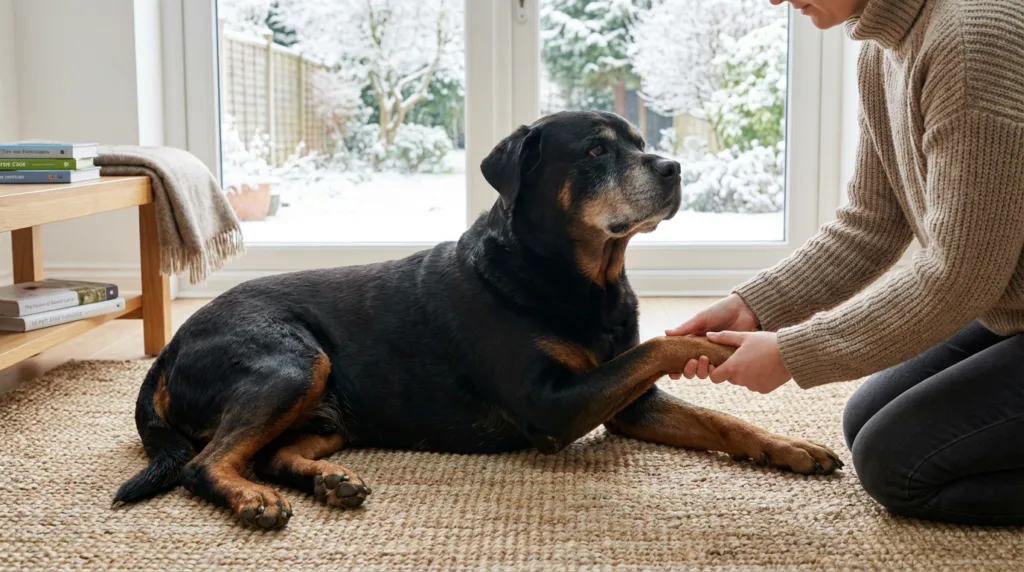
- Your dog is older or has arthritis (cold stiffens joints).
- They have a thin coat or seem visibly chilly (shivering, hunched posture).
- You’ll be outside for more than a quick potty break in freezing temps.
Opt for a waterproof or water-resistant jacket that covers from neck to tail base. Avoid cheap, non-breathable materials that can cause sweating and then chilling.
4. Combat Indoor Dryness & Boredom
Winter is a double-whammy: cold outside, dry heat inside. This can lead to itchy, flaky skin and a bored, pent-up dog.
| The Problem | The Solution |
|---|---|
| Dry Skin & Coat | Add a spoonful of coconut oil or a salmon oil supplement to their food. It boosts skin health from the inside. Consider a humidifier in the room they sleep in most. |
| Lower Activity = Boredom | Mental stimulation is your best friend! 15 minutes of training, a frozen Kong stuffed with peanut butter, or hiding treats in a snuffle mat tires them out just like a walk. |
| Stiff Joints | Provide a warm, padded bed away from drafts. Orthopedic beds are great for seniors. Gentle indoor play keeps muscles moving. |
5. Nutrition & Hydration: The Winter Adjustments
If your Rottie’s outdoor activity plummets in winter, they may need fewer calories to avoid weight gain. Conversely, a working or very active dog in the cold may need more. Monitor their weight closely. Most importantly, ensure they always have access to fresh, unfrozen water. Dehydration is a risk in winter too!
🩺 When to Call the Vet (No Hesitation!)
You know your dog best. Winter can mask or exacerbate issues. Contact your vet if you notice:
- Excessive shivering, whining, or anxiety in the cold.
- Limping or reluctance to walk (could be ice cut, salt burn, or arthritis pain).
- Signs of dry, cracked paws or skin that won’t improve with balm.
- Lethargy, coughing, or any signs of illness (cold weather stresses the immune system).
- Suspicion of antifreeze ingestion (a sweet-tasting, lethal poison). Even a small puddle from a leaky car is dangerous.
The Bonus Round: The “After-Walk” Warm-Up Ritual
This is my favorite part of our winter routine. After our walk, once his paws are clean and dry, I give Thor a good, thorough towel rub-down. I’m not just drying him; I’m massaging his muscles and shoulders, checking him over for any ice or sore spots. It gets his circulation going, helps him warm up evenly, and is an amazing bonding moment. He now comes and sits by the towel rack expectantly! It signals “work is done, now we relax.”
Winter with a Rottweiler can be a wonderful time of cozy companionship. It’s about being observant, proactive, and a little creative. By focusing on protection from the elements, mental engagement indoors, and tuning into their specific needs, you’ll both thrive until spring returns.
What’s the one winter challenge you face most with your Rottweiler? Is it the paw care, the energy levels, or something else? Share your story below!