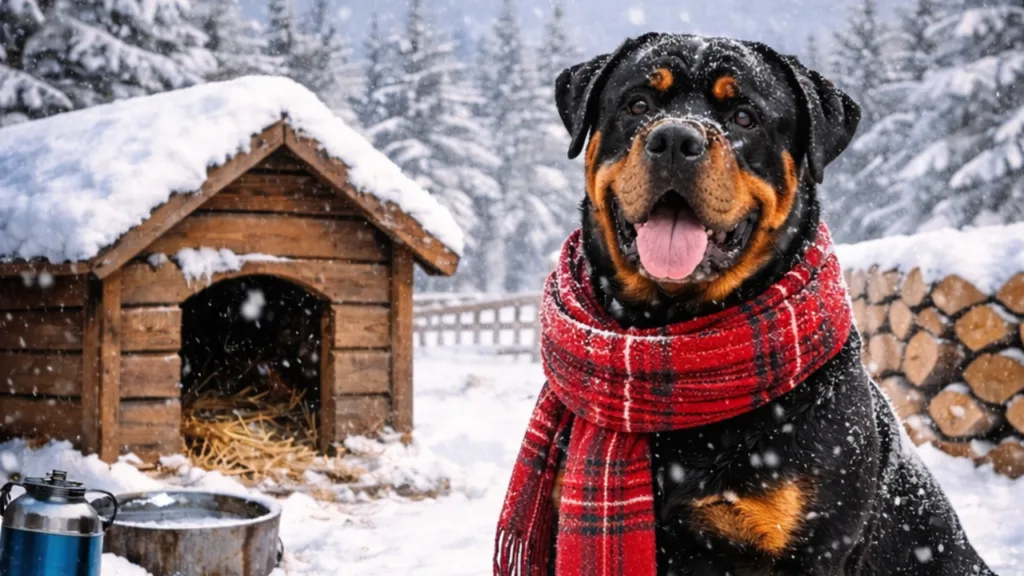
Hey there, fellow Rottie lover. If you’re like me, you’ve watched your loyal companion grow from a clumsy pup into a powerful, dignified adult. We know these dogs are built tough, but anyone who’s shared their life with a Rottweiler knows their joints can be their Achilles’ heel. Now, throw in a cold winter – with its icy walks, dry indoor heat, and tempting couch-potato lifestyle – and those joint issues can really flare up. I’ve been through a few winters with my big guy, Rex, and I’ve learned that a little proactive care makes all the difference. This isn’t about wrapping them in bubble wrap; it’s about smart, simple adjustments to keep them comfortable, mobile, and happy through the frosty months. Let’s dive in.
5 Key Points to Protect Your Rottweiler’s Joints This Winter
Think of this as your winter checklist. We’ll get into the nitty-gritty details of each right after.
- Warm-Up is Non-Negotiable: Never skip the pre-walk warm-up in cold weather.
- Master Indoor Climate Control: Balance cozy heat with joint-friendly humidity.
- Adapt Exercise, Don’t Eliminate It: Swap long, cold hikes for shorter, more frequent activity bursts.
- Invest in Traction & Insulation: Icy sidewalks are a slipping hazard; cold ground saps warmth.
- Nutrition & Weight are Everything: Winter is the easiest time for weight to creep up, adding joint stress.
1. The Crucial Warm-Up (It’s Not Just for Athletes!)
When it’s freezing out, your Rottie’s muscles are tighter and the synovial fluid in their joints is thicker, like cold molasses. Taking them from a warm house straight onto an icy street is asking for a strain. Here’s what I do with Rex:
- Indoor Play First: Spend 5-10 minutes indoors doing gentle play. A slow game of tug-of-war, some easy “puppy push-ups” (sit, down, stand), or just walking up and down a carpeted staircase gets blood flowing.
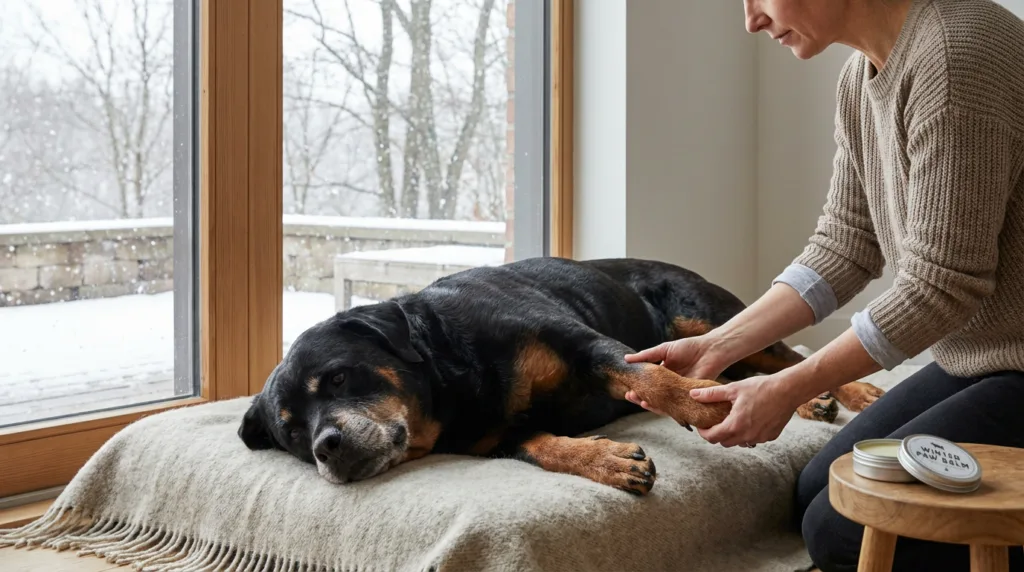
- Massage the Major Joints: Gently rub your hands over their shoulders, hips, and knees for a minute or two. You’re not a professional masseuse – you’re just helping increase circulation.
- Start Slow Outside: Let the first few minutes of the walk be at a sniffing, meandering pace. This is not the time for the “ball chuck.” Let them ease into it.
2. Creating a Joint-Friendly Indoor Environment
Our heating systems are a blessing for us, but they dry out the air, which can make stiff joints feel even creakier for our dogs.
- Combat Dry Air: A simple humidifier near your dog’s favorite resting area can work wonders. Aim for 30-50% humidity.
- Strategic Bedding: Get them off the cold, hard floor. An orthopedic memory foam bed is a fantastic investment. Place it away from drafty doors and direct blasts from heating vents. For older or particularly stiff dogs, a heated dog bed (with a safe, chew-proof cord) or a microwavable heat pad can provide deep, soothing warmth.
- Ramp Access: If your Rottie sleeps on your bed or likes to get on the couch, a sturdy ramp is kinder than making them jump down repeatedly, which jars those joints.
3. Smart Winter Exercise Modifications
Activity is still critical—it maintains muscle mass, which supports the joints. The goal is to be consistent, not intense.
| Instead of This (Winter Risk)… | Try This (Joint-Smart Alternative)… |
|---|---|
| One long, hour-long hike in the cold | Two or three 20-minute brisk walks during the warmest part of the day. |
| High-impact fetch on frozen, hard ground | Indoor “nose work” games (hiding treats in a snuffle mat or around the house) or gentle treadmill walking (if trained). |
| Weekend warrior syndrome (inactive week, super active weekend) | Short, daily activity sessions to maintain consistent muscle and joint mobility. |
4. Traction & Insulation: Your Outdoor Essentials
Ice and snow present two big problems: slipping and cold.
- Paw Care is Paramount: Ice melt chemicals can burn paw pads and are toxic if licked. Wipe paws with a warm, damp cloth after every walk. For snow and ice buildup between toes, trim the hair there and consider dog boots. If your Rottie won’t tolerate boots (Rex took some convincing!), a protective paw wax like Musher’s Secret creates a barrier.
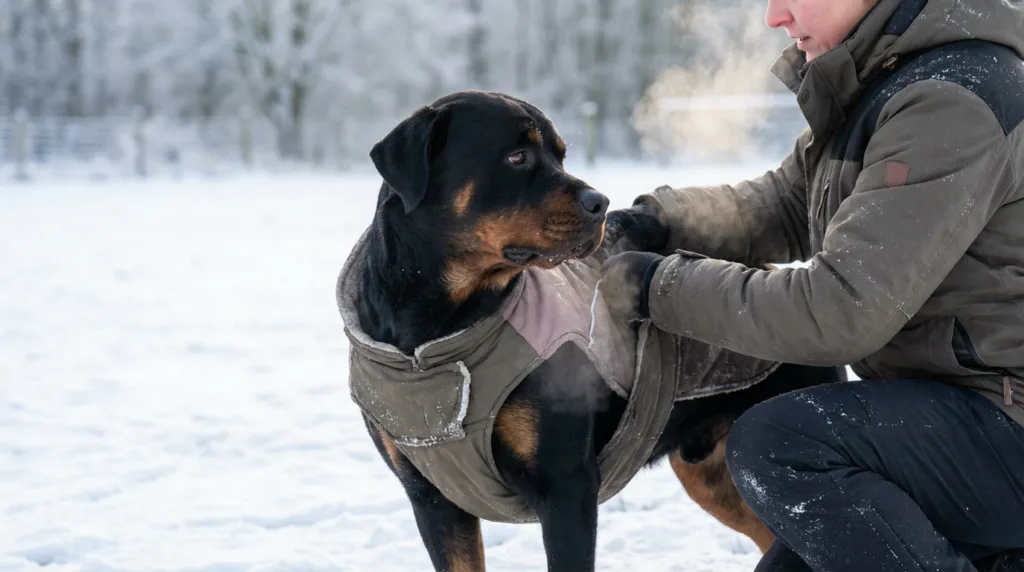
- Visibility & Warmth: It gets dark early. A reflective collar, leash, or LED light keeps you both safe. For very thin-coated or older Rotties, a well-fitting dog coat can help them retain body heat and keep muscles from stiffening up during walks.
5. Nutrition, Weight, and Supplements
This might be the most important point. Winter often means less activity and more cozy treats. Every extra pound is 4-5 pounds of extra pressure on a dog’s joints.
- Weigh and Measure: Be meticulous with food portions. If activity drops, their food intake might need to drop slightly too. Use a measuring cup, not a scoop.
- Treat Wisely: Swap out high-calorie biscuits for low-calorie options like green beans, baby carrots, or pieces of their own kibble used in training games.
- Consider a Joint Supplement: A quality supplement with glucosamine, chondroitin, and MSM can support joint health. I give Rex one year-round, but I’m especially vigilant in winter. Always talk to your vet before starting any new supplement.
Bonus Tip: The “Stiffness Check” & When to Call the Vet 🩺
Pay close attention to how your Rottweiler moves. A little morning stiffness that loosens up after a few minutes is common in winter for adult dogs. But you need to be the detective for signs that it’s more serious.
Call Your Vet If You Notice:
- Stiffness or limping that doesn’t improve after they’ve been up and moving for 15-20 minutes.
- Whining, yelping, or noticeable discomfort when getting up, lying down, or being touched in a specific area.
- Sudden reluctance to do things they usually enjoy, like going for walks, climbing stairs, or jumping into the car.
- Any swelling, heat, or redness around a joint.
- A drastic change in gait or carrying a leg consistently.
Don’t just chalk it up to “the cold and age.” Your vet can rule out issues like a torn ligament (common in Rotties) or arthritis flare-up and provide pain management or treatment plans. It’s always better to be safe.
Wrapping Up: A Season of Cozy Care
Winter with a Rottweiler doesn’t have to be a season of worry. It’s just a time to shift gears. By focusing on warm-ups, a comfy home, smart exercise, paw protection, and strict weight management, you’re not just preventing problems – you’re actively investing in your best friend’s long-term comfort and mobility. These powerful dogs give us so much loyalty and love; a little extra seasonal TLC for their joints is a small way to give some back.
I’d love to hear from you – what’s one winter hack you’ve found that keeps your big dog moving comfortably when the temperature drops? Sharing our experiences is how we all become better pet parents.