Helping Your Rottweiler Thrive: A Winter Guide to Joint Health
Hey there, fellow Rottie lover. If you’re noticing your big buddy is a little stiffer getting up on those cold mornings, or maybe not as eager for their walk when the frost is on the ground, you’re not alone. I’ve been through this with my own gentle giants over the years. Winter can be tough on our large-breed dogs, especially on those powerhouse Rottweiler frames. The cold, the drop in activity, even the dry heat from our furnaces—it all adds up. But don’t worry, it’s absolutely manageable. Think of this as a friendly chat from someone who’s been in your shoes, with a toolbox full of practical, proven ways to keep your Rottweiler’s joints happy and healthy all season long.
Why Winter is Tough on a Rottweiler’s Joints
First, let’s understand what we’re dealing with. It’s not just in your head; your dog really does feel it more when the temperature drops.
The Cold, Hard Facts
Cold air causes muscles and tissues around the joints to tighten up, which can increase pressure and reduce flexibility. Think of it like the grease in a car getting thicker in the cold—everything moves less smoothly. For a breed prone to conditions like hip or elbow dysplasia, this stiffness is more than just discomfort; it can highlight underlying issues.
The “Winter Slowdown” Cycle
Here’s the tricky loop we often see:
- It’s cold and dark outside, so walks get shorter.
- Your Rottie sleeps more on the hard floor or in a drafty spot.
- Less activity leads to weaker supporting muscles and weight gain.
- Weaker muscles and extra pounds put more stress on the joints.
- Stressed, stiff joints make your dog even less willing to move.
And round and round it goes. Breaking this cycle is the key to a comfortable winter.
Your Step-by-Step Winter Joint Care Plan
This isn’t about one magic fix. It’s about layering several smart, consistent habits that work together. Start here.
Step 1: Master the Indoor Warm-Up
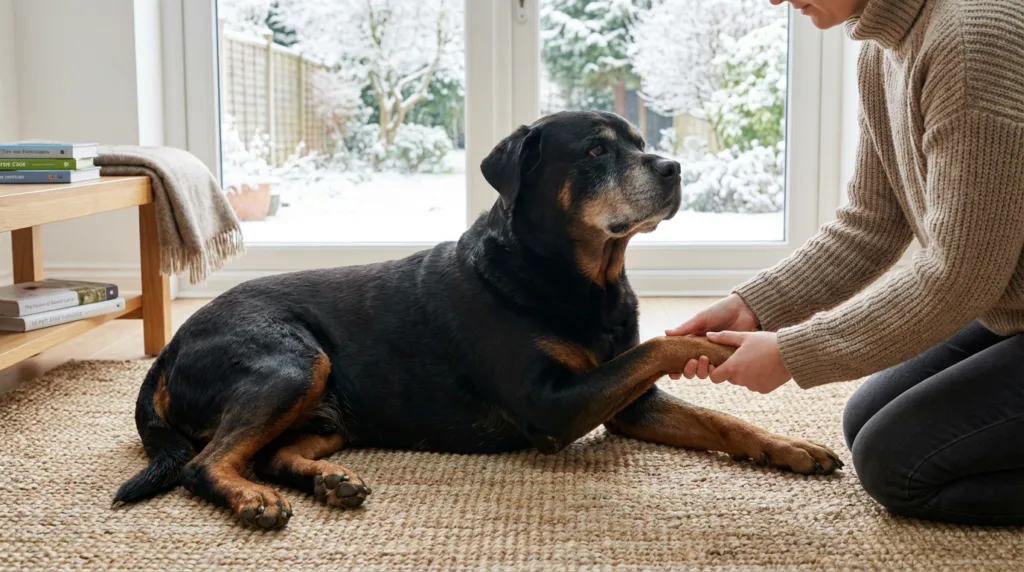
Never go from a cold car or a warm house straight into a brisk walk. Spend 5 minutes indoors doing gentle stretches and massages. Try the “cookie stretch”—lure their head gently toward their shoulder and then toward their hip with a treat to encourage lateral movement. Massage the big muscle groups in their thighs and shoulders in a circular motion. You’ll feel them relax.
Step 2: Rethink Exercise (Quality Over Quantity)
Swap the long, cold slog for shorter, more frequent, and engaging activities.
- Sniffaris: A 20-minute “sniffing walk” where they lead the way is mentally tiring and gets them moving without high impact.
- Indoor Games: Hide treats in a snuffle mat or play very gentle, controlled tug-of-war on a soft carpet.
- Swimming: If you have access to an indoor canine hydrotherapy pool, it’s a winter game-changer.
Step 3: Create a Cozy, Supportive Environment
Your home setup matters more than you think.
- Orthopedic Bed: This is non-negotiable. Get a thick, high-quality orthopedic bed placed away from drafts and cold floors. The memory foam cradles their joints.
- Floor Traction: Slipping on hardwood or tile is a major risk. Use runner rugs, yoga mats, or even non-slip socks for dogs to give them secure footing.
- Ramps: If your Rottie sleeps on your bed or gets in the car, a sturdy ramp prevents painful jumping.
Step 4: Support from the Inside Out (Nutrition & Supplements)
Talk to your vet about these, but they are pillars of joint health for many Rottweiler owners I know.
| Supplement | Why It Helps in Winter |
|---|---|
| Glucosamine & Chondroitin | Supports cartilage repair and lubrication, which is crucial when joints are stiff. |
| Omega-3 Fatty Acids (Fish Oil) | Powerful natural anti-inflammatory. Helps combat stiffness from the inside. |
| MSM | May help reduce discomfort and improve flexibility. |
Also, watch their waistline! Extra weight is the enemy of joints. With less activity, you might need to slightly reduce their kibble portions.
Step 5: The Power of Warmth Therapy
Simple, cheap, and incredibly effective. After a walk or before a rest period:
- Apply a warm (not hot) water bottle wrapped in a towel to their hips or shoulders for 10-15 minutes.
- Use a microwavable heat pad designed for pets.
The heat increases blood flow and soothes tight muscles. It’s like a warm hug for their joints .
Pro Tips and When to Sound the Alarm
Keep these final pieces of advice in your back pocket.
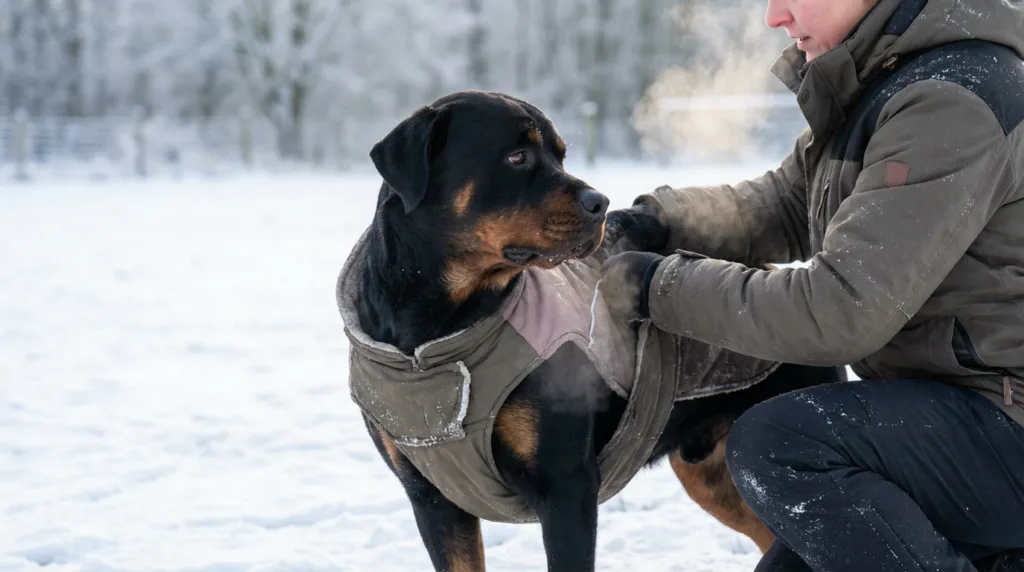
- Paw Care is Part of Joint Care: Ice melt chemicals burn paw pads, and snowballs between toes make walking painful. Use pet-safe ice melt on your property, and consider well-fitting dog boots or a protective paw wax like Musher’s Secret.
- Stay Consistent: Daily, gentle routine is better than sporadic intense activity.
- Hydrate, Hydrate, Hydrate: Indoor heating dries out the air. Make sure fresh water is always available to keep tissues hydrated.
When to Call Your Vet (No Hesitation!)
You know your dog best. If you notice any of the following, please schedule a vet visit:
- Sudden, severe limping or inability to bear weight on a leg.
- Whining, yelping, or noticeable agitation when moving or being touched.
- Swelling or unusual heat around a specific joint.
- Loss of appetite coupled with lethargy.
- Any symptom that persists for more than 48 hours, even if it seems mild.
It’s always better to get a professional opinion. They might recommend prescription anti-inflammatories, laser therapy, or a specific rehab plan.
Wrapping It Up: You’ve Got This
Seeing your confident Rottweiler struggle with stiffness can pull at your heartstrings. But remember, with a proactive approach, you can make a huge difference in their comfort and quality of life during the winter months. It’s about mindful movement, cozy support, and smart internal care. You’re not just a pet owner; you’re their advocate and their source of comfort. The effort you put in now will pay off in more wagging tails and happy, muddy walks when spring finally rolls around.
What’s the first small change you’ll make this week to help your Rottweiler’s joints feel better? Will it be a new warm-up routine, ordering that orthopedic bed, or a chat with your vet about supplements? Share your plan in the comments below!