Winter Woes: Understanding Why Your Spitz Gets Chilly
Hey there, fellow Spitz lover! If you’re here, you’ve probably noticed your fluffy friend acting a little off during the colder months. Maybe they’re shivering on a walk, curling up into a tight ball more than usual, or seem reluctant to go outside at all. As someone who’s spent years with these amazing, fox-faced companions, I can tell you this is a real concern. That gorgeous double coat is a marvel, but it’s not an all-weather forcefield, especially for a Spitz chiot (puppy) or an older dog. Winter brings a unique set of challenges: biting cold, dry air from indoor heating, and a natural drop in activity. Let’s dive into why your Spitz might feel the cold and, more importantly, how you can make this season safe and cozy for them.
Quick Myth Buster: That thick coat is for insulation. It traps body heat to keep them warm. But in very cold, wet, or windy conditions, or if they’re not moving much, that insulation can be overwhelmed. Think of it like wearing a warm sweater in a blizzard, you’d still need a jacket!
The Main Culprits: What Makes a Spitz Cold?
First, let’s understand the “why.” It’s not just about the temperature on the thermometer.
- Their Compact Build: Many Spitz breeds are small to medium-sized with relatively short legs. This means their belly and body are closer to the cold ground, especially if there’s snow or frost.
- Moisture is the Enemy: Snow, sleet, or rain can soak through the outer coat and mat the dense undercoat, destroying its insulating properties. A damp Spitz is a cold Spitz.
- Puppies & Seniors: A Spitz chiot hasn’t fully developed its adult coat or its ability to regulate body temperature. Senior dogs may have thinner coats, arthritis (which cold worsens), or less efficient circulation.
- Indoor Heating: This is a sneaky one! Our warm, dry homes can cause your Spitz’s skin to become dry and itchy. Plus, the constant switch from a toasty house to the freezing outdoors is a shock to their system.
- Boredom & Low Activity: On gloomy winter days, we all move less. A less active dog generates less body heat, making them more susceptible to feeling chilly even indoors.
Your Action Plan: Keeping Your Spitz Warm Step-by-Step
Don’t worry, you don’t need to turn your home into a sauna! A few thoughtful adjustments make all the difference.
Step 1: Fortify the Coat (The First Line of Defense)
This is your most important job. A well-maintained coat is their best winter gear.
Brushing is Non-Negotiable: Brush your Spitz more often in winter, not less. Aim for 3-4 times a week. This removes dead undercoat that’s trapped, allowing the healthy, dense fur to fluff up and create insulating air pockets. A matted coat is flat and useless against the cold.
Bathe Less, Condition More: Limit baths to when absolutely necessary. Over-bathing strips essential oils that waterproof and insulate the coat. When you do bathe, use a moisturizing shampoo and conditioner, and make sure they are 100% completely dry before going outside—use a blow dryer on a cool setting.
Paw & Belly Care: Trim the fur between their paw pads to prevent ice balls from forming. Consider a pet-safe paw wax before walks to protect from salt and ice melt chemicals.
Step 2: Smart Outdoor Time
Adjust your routines to keep outdoor time safe and enjoyable.
- Shorter, More Frequent Walks: Instead of one long walk, try two or three shorter ones. This minimizes exposure.
- Timing is Everything: Walk during the warmest part of the day, usually late morning or early afternoon, when the sun is out.
- Invest in Gear: For puppies, seniors, or very cold climates, a sweater or waterproof coat is a great idea. It protects their core. Booties can save their paws from salt, chemicals, and ice cuts.
Pro Tip: Play a vigorous game of fetch or tug indoors before a walk. It gets their blood pumping and body warm, making them better prepared for the cold.
Step 3: Create a Cozy Indoor Sanctuary
Your home should be their warm haven.
- Draft-Free Zone: Give them a thick, orthopedic bed (great for joints) placed away from drafts, doors, and cold tile floors. Raised beds also help keep them off cold surfaces.
- Humidity Help: Combat dry heating air with a humidifier. It helps their skin, coat, and respiratory system.
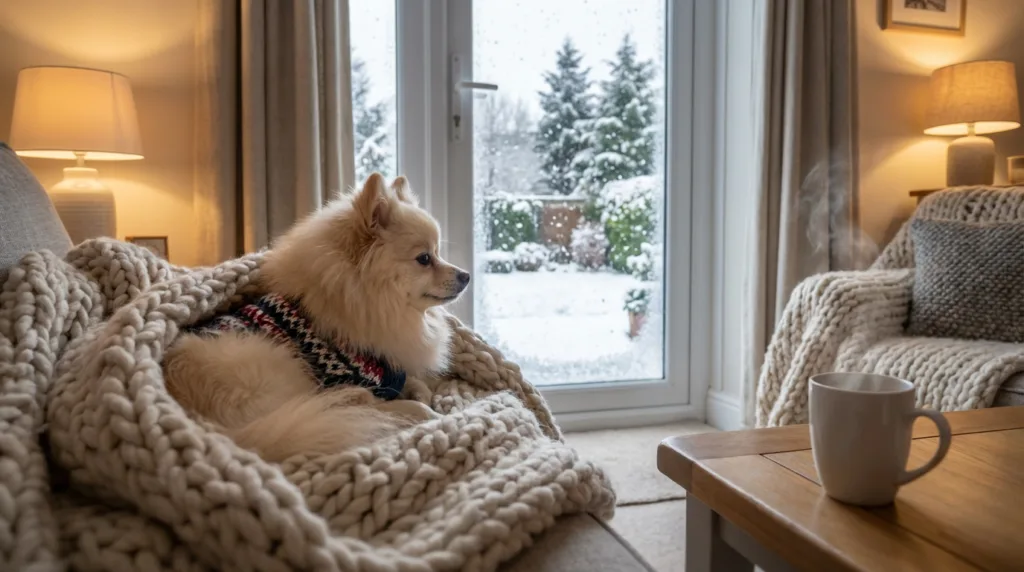
- Snuggle Options: Provide a soft blanket they can burrow into. Many Spitz love the feeling of being “denned.”
| Signs Your Spitz is Comfortable | Signs Your Spitz is Too Cold |
|---|---|
| Relaxed posture, sleeping stretched out | Shivering or trembling (obvious sign!) |
| Willing to go for walks and play | Whining, anxiety, or reluctance to go outside |
| Cold, wet nose (normal!) | Lifting paws off the ground repeatedly |
| Seeking cool spots occasionally | Curling into a very tight ball, tucking tail |
Extra Tips for a Happy Winter Spitz
A little extra thought goes a long way in keeping their spirits up.
- Mental Stimulation: Beat the boredom with puzzle toys, training sessions, or hide-and-seek with treats. A tired mind is a happy dog, even if they can’t run outside for hours.
- Nutrition Check: If your Spitz is very active outdoors in winter, they may need slightly more food for energy. Conversely, a less active indoor dog might need less. Consult your vet.
- Hydration: Keep fresh water available. Dry winter air and heating can lead to dehydration.
❄️ When to Call the Vet ❄️
Trust your gut. You know your dog best. Contact your veterinarian immediately if you notice:
Persistent shivering that doesn’t stop indoors, lethargy or weakness, signs of pain or stiffness (like difficulty standing), any discoloration (pale, blue, gray) of the skin, gums, or paw pads, or if you suspect frostbite (cold, hard skin that turns red and puffy as it warms). It’s always better to be safe.
Wrapping Up (Pun Intended!)
Living with a Spitz through the winter is all about mindful care. It’s not about coddling, but about understanding that their magnificent coat has limits. By focusing on coat maintenance, adjusting outdoor activities, and creating a warm, engaging home environment, you’re not just preventing discomfort—you’re ensuring your furry family member stays healthy, happy, and ready for springtime adventures.
Remember, a Spitz chiot needs extra vigilance, and every dog is an individual. What works for my Spitz might need tweaking for yours. The key is to observe, adapt, and enjoy the unique bond that comes from caring for them through every season.
What’s the one winter hack that your Spitz absolutely loves? Do they have a favorite sweater or indoor game? Sharing our experiences helps us all become better pet parents!